Positron emission tomography/computed tomography is a hybrid nuclear medicine imaging technique that helps radiologists spot abnormal metabolic activity. PET/CT is commonly used to diagnose cancers, heart diseases and certain brain disorders, among other conditions.
Though both modalities offer providers insight into the extent of a patient’s disease, WB-MRI may be more beneficial for patients than the current standard of care.
Though these treatments are typically done with assistance from real-time fluoroscopy, there is ample evidence nuclear imaging may offer more benefits.
Currently, the organization relies on a mobile PET unit that parks once every week. However, demand has grown for PET/CT in the area, rising by around 60% over the last three years alone.
According to new research, gliomas—a deadly group of brain tumors that are difficult to treat—have increased folate receptor expression, meaning they also show increased uptake of folate-based radiopharmaceuticals on PET imaging.
The recent CMS coverage determination did not make any mention of beta-amyloid PET imaging that is necessary for both diagnosing Alzheimer’s and monitoring the effectiveness of related treatments.
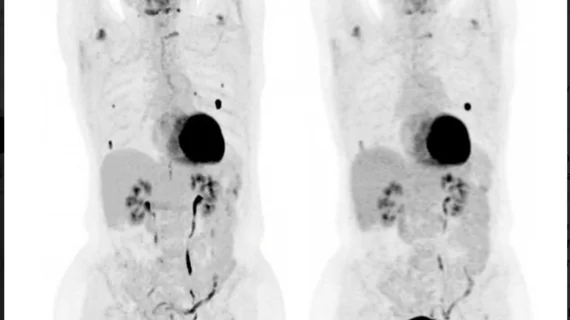
The findings support adopting F-18 DCFPyL PET/CT as the standard of care for prostate cancer staging, authors of a new Scientific Reports paper concluded.
Rather than administering radiolabeled glucose for exams, imagers give patients a small amount of a harmless glucose solution that is said to be equivalent to a can of a carbonated drink.
Difficulty obtaining PET/CT scans was reported by 55% of respondents, with 21% citing this as the greatest barrier in treating classic Hodgkin lymphoma.