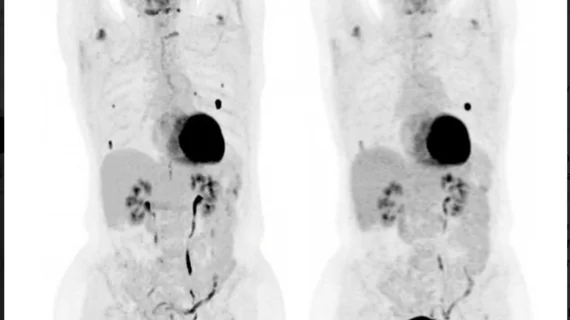
Positron emission tomography/computed tomography is a hybrid nuclear medicine imaging technique that helps radiologists spot abnormal metabolic activity. PET/CT is commonly used to diagnose cancers, heart diseases and certain brain disorders, among other conditions.
Though both modalities offer providers insight into the extent of a patient’s disease, WB-MRI may be more beneficial for patients than the current standard of care.
Though these treatments are typically done with assistance from real-time fluoroscopy, there is ample evidence nuclear imaging may offer more benefits.
Currently, the organization relies on a mobile PET unit that parks once every week. However, demand has grown for PET/CT in the area, rising by around 60% over the last three years alone.
Experts hope the information gained from their research could help providers better determine whether patients will regain mobility after sustaining an injury.
If 25% tariffs go into effect, it could have a big impact on the cost of medical imaging and radiotherapy systems, with many manufacturing facilities in Mexico.
There are numerous radiotracers specifically designed to identify prostate cancer, but experts say one may be superior to the others at both the patient and lesion level.