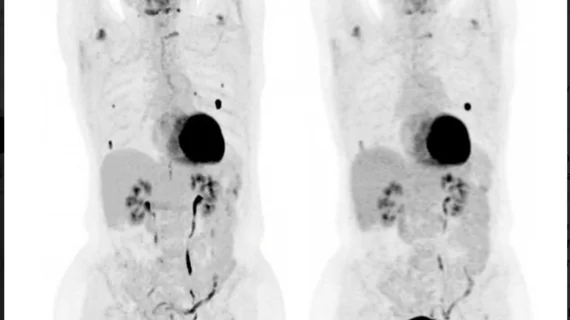
Positron emission tomography/computed tomography is a hybrid nuclear medicine imaging technique that helps radiologists spot abnormal metabolic activity. PET/CT is commonly used to diagnose cancers, heart diseases and certain brain disorders, among other conditions.
Though both modalities offer providers insight into the extent of a patient’s disease, WB-MRI may be more beneficial for patients than the current standard of care.
Though these treatments are typically done with assistance from real-time fluoroscopy, there is ample evidence nuclear imaging may offer more benefits.
Currently, the organization relies on a mobile PET unit that parks once every week. However, demand has grown for PET/CT in the area, rising by around 60% over the last three years alone.
Experts recently uncovered strong associations between reports of memory loss from patients' peers/loved ones and the presence of tau tangles on imaging.
An AI-aided way has emerged to confidently select dementia patients who are likely to benefit from amyloid-PET imaging while appropriately de-selecting patients for whom the costly exam would probably be unhelpful.











![Whole-body maximum-intensity projections over time after [68Ga]Ga-DPI-4452 administration.](/sites/default/files/styles/240x220/public/2024-05/jnm_may_2024_hofman.jpg.webp?itok=Wi7oAXVL)