
Pre-imaging pain medication may impact accuracy of abdominal ultrasounds
Certain pain treatments could impact the accuracy of abdominal ultrasound exams used to evaluate acute cholecystitis (AC).
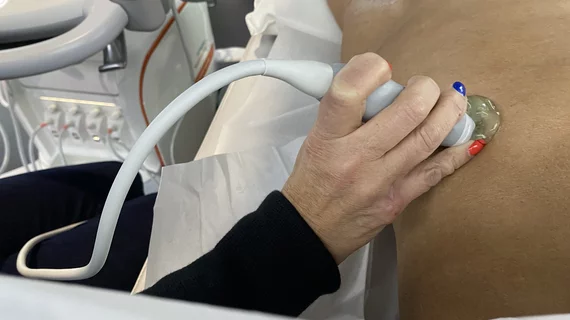
Ultrasound is frequently used to rule out AC—a painful inflammatory condition of the gallbladder. These exams include a sonographic Murphy’s sign (SMS) assessment, which gauges patients’ pain tolerance when the transducer is placed firmly over the visualized gallbladder. Patients who do not tolerate the pressure applied to the area will typically wince, contract their abdomen or display some other physical indication of pain, suggesting positive SMS.
However, it is common for patients who present to the emergency department with acute abdominal pain to be given some form of pain-relieving medication prior to imaging. New data published in Emergency Radiology suggest this could skew the results of the exam.
“In practice, ED physicians often provide pain medication to patients presenting with undifferentiated abdominal pain, which may mask symptoms or alter abdominal exams to such a degree that critical diagnoses can be obscured,” Karina R. Marcelo, MD, with the department of radiology at Tripler Army Medical Center in Honolulu, and colleagues noted. “There are contradictory findings with regard to the SMS and the impact of premedication.”
The team hypothesized that the type of pain relief administered by providers could influence the accuracy of SMS assessment. To gain a better understanding of the effects of pre-medication, the group analyzed the cases of nearly 700 patients who underwent abdominal ultrasound for acute right upper quadrant pain. Dividing the cohort based on whether they received opioid or non-opioid analgesia (OA and NOA), researchers compared the outcomes and false negative rates between each group.
Use of opioids resulted in an increased rate of indeterminate SMS and diagnoses, with around 8% of OA patients having inconclusive US results compared to just 3% of NOA patients. In the OA group, there were 24 instances of missed cholecystitis. There was no significant difference between false negative rates between the two groups, but the team noted an uptick in these rates in patients who were given OA medication 30 minutes prior to their exam.
Researchers suggested their findings support the practice of administering pain medication prior to US in patients presenting with right upper quadrant pain.
“Clinicians should consider delaying OA until after the RUQUS or consider delaying the study at least 30 minutes after the administration of OA due to increased risk of false-negative results,” the authors advised. “Additionally, our results suggest that administration of NOA is a viable alternative analgesic option for many patients without sacrificing diagnostic accuracy.”
Read more about the study here.

In addition to her background in journalism, Hannah also has patient-facing experience in clinical settings, having spent more than 12 years working as a registered rad tech. She began covering the medical imaging industry for Innovate Healthcare in 2021.