
Molecular imaging ups invasive cancer detection in dense breast tissue, spots lesions missed by DBT
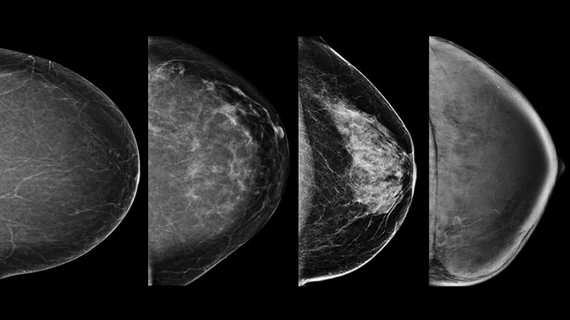
Molecular imaging increases cancer detection in women with dense breasts, often spotting lesions missed on digital breast tomosynthesis (DBT) exams.
What’s more, the majority of the additional cancers missed on DBT screening are invasive in nature, according to new research. Published in RSNA’s Radiology, the findings suggest that molecular breast imaging (MBI) may represent an effective alternative to standard supplemental exams, like ultrasound and MRI.
“Someone who’s having their routine annual screen every year should not be diagnosed with advanced breast cancer,” lead author Carrie B. Hruska, PhD, professor of medical physics at Mayo Clinic in Rochester, Minnesota, said in a news release on the findings. “That’s just unacceptable. With a supplemental screening every few years, we hope to find cancers earlier and see the diagnosis of advanced cancer go way down.”
The results were derived from the Density MATTERS (Molecular Breast Imaging and Tomosynthesis to Eliminate the Reservoir) Trial, which was designed to examine the utility of MBI as a supplemental imaging option. The trial included nearly 3,000 participants across 5 states who underwent two annual screening rounds using both DBT and MBI between 2017 and 2022. Participants were between ages 40 and 75 with confirmed dense breast tissue (mostly category C) and no symptoms that would suggest they had breast cancer.
There were 30 cancerous lesions identified in 29 patients using MBI alone. Of those 71% were invasive, measuring an average of 0.9 centimeters. Around 20% of the MBI-detected cancers were determined to be node-positive, suggesting the modality is capable of detecting “clinically important disease” that may be missed on 3D mammograms.
Hruska indicated these findings should be considered by providers and patients tasked with determining the most effective supplemental screening option relative to density category.
“I don’t want to discourage anyone from getting a mammogram, because they absolutely should,” Hruska said. “However, DBT doesn’t find all cancers, and women need to understand its limitations and consider how supplemental screening can fill the gap.”
Read more about the findings here.

In addition to her background in journalism, Hannah also has patient-facing experience in clinical settings, having spent more than 12 years working as a registered rad tech. She began covering the medical imaging industry for Innovate Healthcare in 2021.