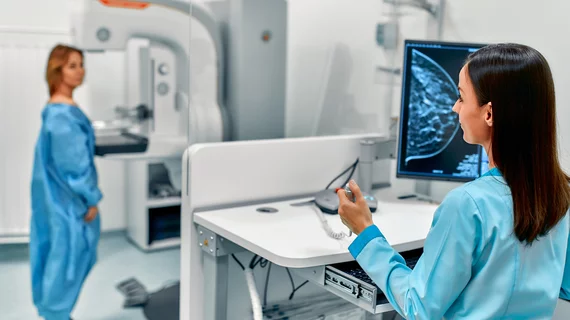
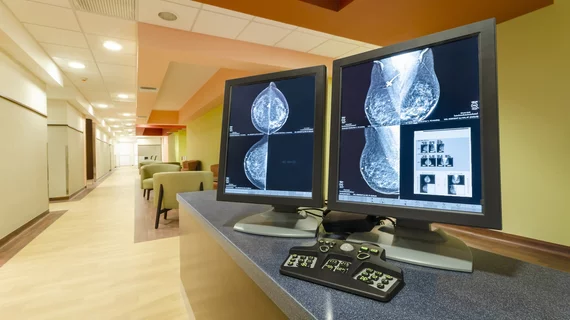
Women’s imaging encompasses many radiology procedures related to women and the diseases that are most prevalent to women such as breast cancer or gynecological issues. Mammogram, breast ultrasound, breast MRI and breast biopsy are the most commonly used procedures.
New research could provide useful information for cancer registries and potentially help policymakers better evaluate screening outcomes to develop more effective guidelines.
Questions about menopause, oral contraceptive use and hormone replacement therapy should all be part of the conversation when evaluating a woman's cardiovascular health.
A new review led by UCLA researchers examines the utility of commercially available AI tools for screening mammography and evidence surrounding their ability to detect interval cancers.
Researchers involved in its development are hopeful that the scanner could eventually lead to improved outcomes in cancer patients who require surgery to remove malignant tissue.
“These findings raise the question of whether insurance reimbursement impacts referral patterns for other conditions and specialties, and the extent to which it may outweigh evidence-based care decisions."
“Understanding the disparities in diagnostic breast imaging can facilitate the development of interventions that aim to close gaps," says Marissa B. Lawson, MD.
New research provides detailed insight into how specific factors that impact hormone levels, such as breastfeeding, contraception, medication and menopausal status, alter BPE on CEM.
Diagnosing endometriosis often requires laparoscopy, as ultrasound and MRI frequently fail to detect the painful, sometimes debilitating condition, especially in its early stages.