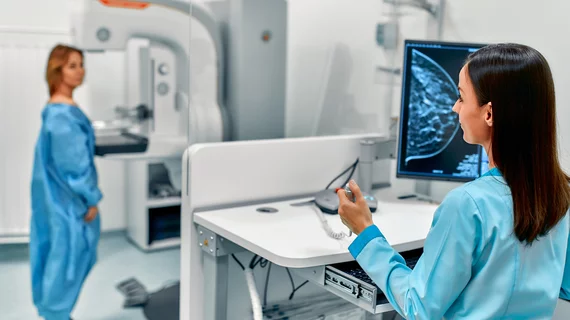
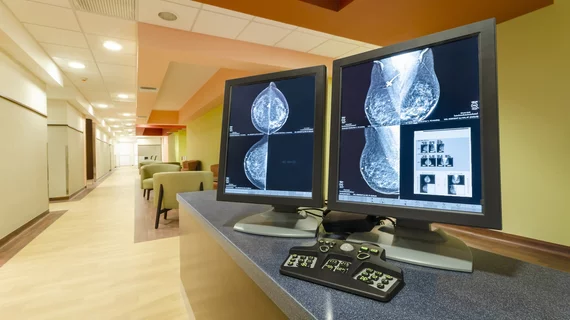
Women’s imaging encompasses many radiology procedures related to women and the diseases that are most prevalent to women such as breast cancer or gynecological issues. Mammogram, breast ultrasound, breast MRI and breast biopsy are the most commonly used procedures.
New research could provide useful information for cancer registries and potentially help policymakers better evaluate screening outcomes to develop more effective guidelines.
Questions about menopause, oral contraceptive use and hormone replacement therapy should all be part of the conversation when evaluating a woman's cardiovascular health.
A new review led by UCLA researchers examines the utility of commercially available AI tools for screening mammography and evidence surrounding their ability to detect interval cancers.
Authors of a new paper contend their findings could be beneficial in adapting public messaging related to supplemental imaging to better inform those who may need it.
Ultrasound-guided diffuse optical tomography (US-DOT) is a technique that combines the use of ultrasound with near-infrared light to create 3D pictures of tissues.
American College of Radiology Chief Executive Officer Dana Smetherman, MD, explains the highlights of the recent BI-RADS Version 2025 release, the first update in more than a decade.
The new policy applies to all health plans across Pennsylvania, New York, West Virginia and Delaware, “removing financial barriers for essential breast cancer diagnostics.”