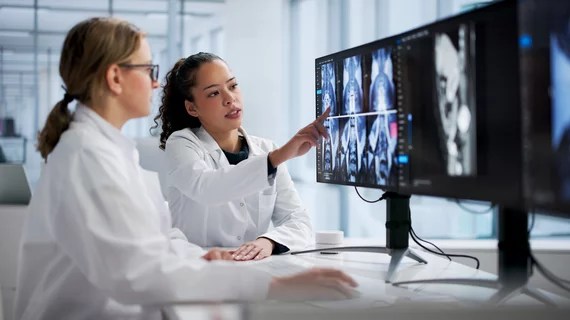
Many know Sol Radiology as the Southern California-based practice that, in this decade, grew from three radiologists to 45 in only three years. But other key indicators of Sol’s development might be the pieces from which presently small practices stand to learn the most.
When soaring imaging volumes began to exacerbate workload inequity and drive physician burnout, the leadership team at one prominent radiology practice found the root cause easy to isolate: operational fragmentation.
Radiology is rethinking reporting. Legacy systems are being swapped out in favor of intuitive, standardized, AI-powered tools. Greater automation is driving quantifiable improvements into both clinical outcomes and business metrics. Stated another way, radiology reporting is having a moment.
A referring physician orders an MRI of the lumbar spine and hits send. That order lands at three, sometimes four, outpatient imaging centers simultaneously. The center that contacts the patient first books the appointment. The rest miss out on the revenue.
3D surface modeling and virtual surgical planning are expanding radiology’s contribution to multidisciplinary teams. Together, AI-driven interpretation and 3D-enabled clinical collaboration represent two distinct, complementary forces shaping the next decade of radiology.
Diagnostic Imaging Services (DIS) is a five-site freestanding imaging practice located in the greater New Orleans area. Unfortunately, the practice experienced disaster first-hand when Hurricane Katrina hit in August 2005.
University of Washington (UW) Medical Center in Seattle, Wash., is a PACS pioneer, first deploying digital image management a decade ago. Today, the hospital and its radiology department continue to stand at the leading edge of technology.
With continued procedural growth and study volume, the aging of digital imaging exams and ever-increasing demand for complex 3D image sets in MR and CT, the proliferation of digital images has created a challenge shared by today’s radiology and IT directors, as well as CIOs addressing image management from an enterprise level.
Digital mammography deployments are on the rise—fast. The early adoption phase is drawing to a close as facilities large and small that delayed taking the plunge into digital now aggressively invest in the technology.
The relationship between Alegent Health and Siemens goes beyond imagingand IT equipment. They have built a strategic alliance, which helpsguide the decision-making process at the healthcare organization.
Hospitals across the country are struggling to contain costs whileensuring patient safety and high-quality care. Alegent Health, an11-year-old non-profit health system based in Omaha, Neb., that servesNebraska and southwestern Iowa is investing in technology to helpprovide unparalleled quality.
Alegent Health in Omaha, Neb., has tapped into an array of Siemensimaging and IT solutions to improve operations, workflow and patientcare across five of its hospitals and multiple outpatient sites.