The exam should be performed on patients with greater than 10 years of life expectancy and between the ages of 50 and 70, with earlier imaging recommended for black men.
Lawmakers have opted against authorizing funding for the Wasteful and Inappropriate Service Reduction Model, citing concerns it will overburden patients and providers.
Though both modalities offer providers insight into the extent of a patient’s disease, WB-MRI may be more beneficial for patients than the current standard of care.
MRI-detected signs of cardiac remodeling may tell clinicians a thing or two about a patient's odds of developing certain cancers. Changes in heart muscle mass, for example, were linked to an increased risk of breast cancer.
The NSA independent dispute resolution process was updated by federal agencies on May 28, with the final rule including a slew of changes that affect radiology providers.
The ratings agency contends RadNet is constrained by its geographic concentration in 11 states and high fixed costs, including sizable interest expenses.
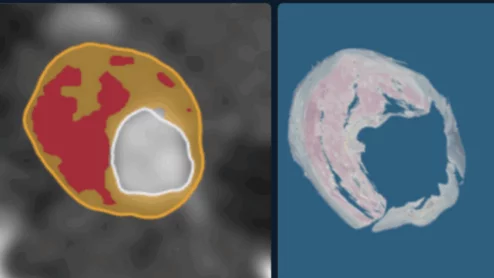
The product, which is offered within Elucid’s novel Plaque-IQ software suite, allows physicians to analyze lesion composition and plaque burden across any vessel.
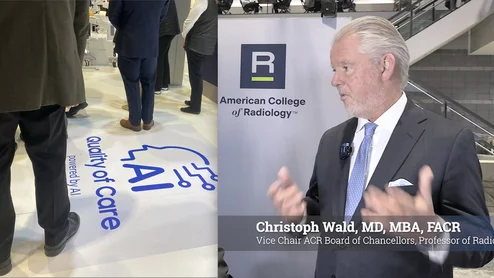
Incoming ACR board chair Christoph Wald, MD, explains the ACR resources available to radiology practices to better evaluate artificial intelligence imaging algorithms.
MRI-detected signs of cardiac remodeling may tell clinicians a thing or two about a patient's odds of developing certain cancers. Changes in heart muscle mass, for example, were linked to an increased risk of breast cancer.