Compared with postoperative stereotactic radiation therapy, an investigational intraoperative RT approach could significantly reduce local tumor recurrence and improve survival in patients with newly diagnosed operable brain metastases.
New findings could shift the standard approach to preventing brain metastases in SCLC, particularly as modern MRI allows clinicians to detect and treat brain disease earlier.
The imaging agent could potentially help doctors characterize a malignancy's aggression and identify lesions with a higher likelihood of invasion or metastasis.
A new review led by UCLA researchers examines the utility of commercially available AI tools for screening mammography and evidence surrounding their ability to detect interval cancers.
Although the predictive power of radiomics has been touted as a tool that could improve patient outcomes, the method has a long way to go before it can be reliably introduced into real-world clinical environments.
The randomized, double-blinded phase 3 study revealed gadopiclenol to be noninferior to gadobutrol for all qualitative visualization parameters as rated by all blinded readers involved in the trial.
Researchers at the National Institute of Standards and Technology (NIST) are working on developing measurements that will provide better insight into soft tissue properties visualized on portable MRI images.
The program leverages the in-context learning abilities of large language models to generate report summaries using domain-specific, individualized data relative to radiology.
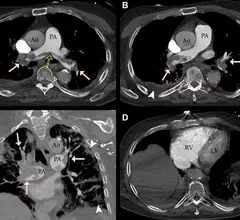
CT findings that have historically been deemed as concerning relative to PE might not hold as much weight when it comes to associated risks as previously thought, new analysis suggests.
The new technique mixes MRI signals at different gradient pulse strengths and timings, offering better visualization of differences in the way water molecules move through tissues.