Compared with postoperative stereotactic radiation therapy, an investigational intraoperative RT approach could significantly reduce local tumor recurrence and improve survival in patients with newly diagnosed operable brain metastases.
New findings could shift the standard approach to preventing brain metastases in SCLC, particularly as modern MRI allows clinicians to detect and treat brain disease earlier.
The imaging agent could potentially help doctors characterize a malignancy's aggression and identify lesions with a higher likelihood of invasion or metastasis.
A new review led by UCLA researchers examines the utility of commercially available AI tools for screening mammography and evidence surrounding their ability to detect interval cancers.
Professional consensus supports the use of ultrasound for initial imaging evaluation of patients presenting in the ED with suspected urinary stone disease (USD). However, as of 2018, only 2% of these patients received ultrasound while some 59% had CT.
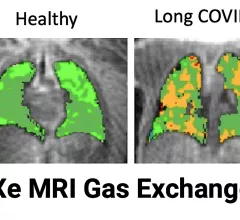
Sean Fain, PhD, vice chair of radiology and research and a professor of radiology, University of Iowa, discusses how long-COVID lung damage can be tracked using xenon (Xe) gas MRI and quantitative CT at RSNA 2022.
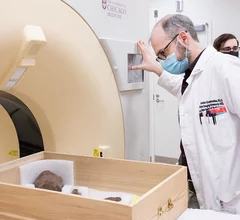
Experts are hoping that, by imaging the dinosaur’s shoulder girdle and forelimb, they can create a digital model that could help in determining a T. Rex arm’s range of motion and strength.
Claustrophobic or not, most would choose the radiation-free modality over CT and tend to consider imaging-exam outcomes more worrisome than MRI in and of itself anyway.