
Radiation oncologists who maintain certification more likely to deliver low-cost cancer treatment
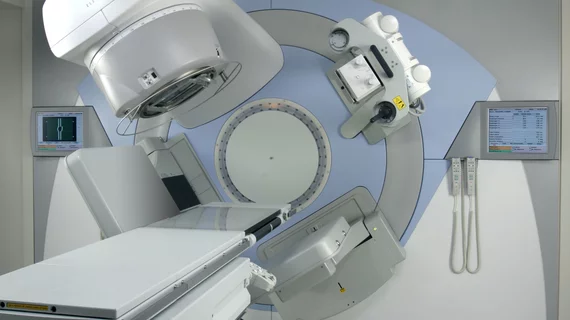
Radiation oncologists who voluntarily participate in the American Board of Radiology maintenance of certification (MOC) are more likely to turn to more contemporary treatment techniques than those who do not.
A new paper in Academic Radiology details how certification impacts the methods in which cancer patients are treated by radiation oncology providers. Findings suggest that not only are participants likelier to turn to the most up-to-date and innovative treatments for their patients, but that their regimens also tend to be shorter. This results in cost-savings for both organizations and patients.
Radiation oncologists certified before 1995 have essentially been “grandfathered in,” with those providers only having to certify once in a lifetime. Now, these specialists have to complete rolling three-year continuing medical education requirements, while those who were grandfathered in may voluntarily participate in MOC. Whether certification should be mandatory for all is often debated among providers, but these latest findings indicate that opting not to participate may affect how they manage patient care.
“In essence, this could equate to patients served by ‘grandfathered’ radiation oncologists who elect not to participate in MOC being deprived of the latest standards,” wrote co-authors Thomas P. Kole, MD, PhD, and Albert Heuer, PhD, both with Rutgers University's School of Health in Newark, New Jersey.
Experts recently conducted a retrospective analysis of the CMS Medicare Part B Public Use File to get a better understanding of how MOC participation impacts patient care. Healthcare Common Procedure Coding System codes for radiation oncologists were analyzed to determine technique-specific utilization rates and Medicare costs by MOC, enabling the team to assess treatment course length and costs.
According to the data, less than 10% of the lifetime certificate holders voluntarily participated in MOC. Participants more frequently used advanced radiation techniques, such as intensity modulated radiation therapy and stereotactic body radiation therapy. This translated into shorter treatment durations, lower Medicare professional costs per physician and significantly lower (-10.31%) Medicare costs per radiation treatment course.
The authors suggested that low voluntary compliance among the lifetime certificate holders could be perceived as “reflective of negative perceptions and dissatisfaction with MOC amongst the diplomates.” They added, “the lack of data demonstrating improved outcomes or adoption of best practices with MOC in diagnostic radiology leaves little incentive for diplomates to participate without mandate by the [American Board of Radiology].”
However, these findings should be interpreted with caution, the group noted, as they do not determine causality.
Read more here.

In addition to her background in journalism, Hannah also has patient-facing experience in clinical settings, having spent more than 12 years working as a registered rad tech. She began covering the medical imaging industry for Innovate Healthcare in 2021.