
New radiopharmaceutical achieves remission in difficult-to-treat pancreatic cancer
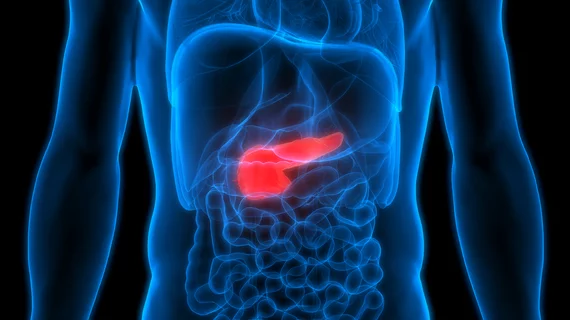
A new radiopharmaceutical treatment has the potential to significantly slow and even halt the progression of pancreatic cancer.
That’s according to research published this week in the Journal of Nuclear Medicine. The paper details the utility of 177 Lu-AKIR001, which targets CD44v6—a known variant of the CD44 glycoprotein that is created through alternative RNA splicing; CD44v6 is expressed in numerous cancers, including pancreatic ductal adenocarcinoma.
PDAC accounts for the majority of pancreatic cancers and is accompanied by high mortality rates. Less than 5% of patients with metastatic disease survive five years past their diagnosis. This is largely owed to pancreatic ductal adenocarcinoma's limited treatment options. Although surgery is the only curative approach, less than 20% of patients are surgical candidates.
Experts are hopeful that 177 Lu-AKIR001 could offer another option for patients in whom surgery is not feasible.
"[Pancreatic ductal adenocarcinoma] is very difficult to treat, and new options are urgently needed," Marika Nestor, PhD, a professor in the Department of Immunology, Genetics and Pathology at Uppsala University in Sweden, said in a news release on the research. "Our previous findings suggest a possible new targeted treatment approach for pancreatic cancer patients whose tumors express CD44v6, which may help make treatment more precise and effective."
For their work, researchers tested the radiopharmaceutical as both a solo therapy and adjunct to traditional chemotherapy in mice implanted with pancreatic ductal adenocarcinoma xenografts. The subjects were treated with one of the two treatment options, offering researchers a chance to assess how the radiopharmaceutical performed in terms of efficacy and safety.
The team observed strong and selective uptake of 177 Lu-AKIR001; at a dose of 12 MBq of the radiopharmaceutical, complete remission was achieved in 40% of subjects, while the method that combined the treatments achieved this in 14%. What’s more, the treatment was proven to be safe, as no toxicity was observed.
Now, the treatment is being tested in humans and for different cancers. The team is optimistic about how it could affect personalized cancer care in the future.
"Targeted radiotherapies have already transformed treatment for prostate and neuroendocrine tumors," said Nestor. "Our findings suggest that CD44v6 can be added to the list of targets that can be reached with this approach, and, importantly in a cancer where we desperately need new options."
Read more here.

In addition to her background in journalism, Hannah also has patient-facing experience in clinical settings, having spent more than 12 years working as a registered rad tech. She began covering the medical imaging industry for Innovate Healthcare in 2021.