
Common sources of work-related stress among radiology staffers
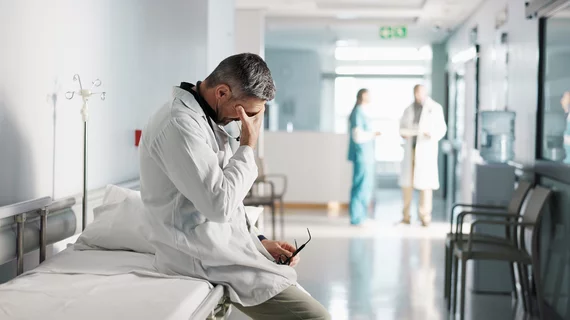
A new survey explores some of the common sources of work-related stress among radiology staffers.
Burnout remains a major challenge in radiology practice, but available studies on the subject have primarily focused on physicians. Experts with Cincinnati Children's Hospital sought to better understand how stress impacts others in the imaging department, such as nurses and radiologic technologists.
Administered in 2024, their anonymous survey reached a total of 290 (or 72% of) employees, including 92% of clinical faculty, 63% of technologists, 51% of nurses, and 51% of other staffers.
“Understanding role-specific contributors to workplace stress and professional satisfaction may help identify operational targets for organizational interventions,” Rama S. Ayyala, MD, with the Department of Radiology at Cincinnati Children’s, and co-authors wrote Aug. 26 in the American Journal of Roentgenology.
Among the respondents, 72% of clinical faculty reported work-related stress, higher than the tallies for technologists (60%), nurses (24%) and other staffers (30%). Meanwhile, 41% of clinical faculty reported work-related satisfaction versus 58% of rad techs, 71% of nurses and 62% of other staffers.
The most common contributors to workplace stress for faculty were overall work volume (53%), complexity of imaging examinations (53%), inappropriate use of STAT and ASAP orders (47%), working weekends (47%) and requests for inappropriate exams (43%). For technologists, common stressors included overall work volume (69%), inappropriate STAT/ASAP orders (64%), requests for inappropriate exams (51%), expectations to do work immediately (50%) and conflicting demands on their time (48%). For nurses, common complaints included inadequate pay (44%), inadequate facilities (41%), overall work volume (29%), requests for inappropriate exams (28%) and call (25%).
Conversely, the most common contributors to workplace satisfaction for faculty were positive impact on patient care and outcomes (89%), good relationships with colleagues (79%) and perception of doing a good job by colleagues (72%). For technologists, positive interactions with patients and families was the No. 1 answer (92%), followed by good relationships with colleagues (82%) and positive impact on patients and families (82%). And for nurses, the top answers included positive interactions with patients and families (88%) and positive impact on patient care and outcomes (88%), with six additional contributors tied at 82%.
Across all radiology department employees, the most common stressors were generally system-level issues including modifiable operational or workflow challenges, the study found. The authors contend their findings indicate a larger role for workflow redesign and other operational interventions, rather than traditional individual wellness initiatives, in improving workplace well-being.
“Inappropriate requests and misuse of STAT/ASAP orders could potentially be mitigated through clinical decision support aligned with appropriateness criteria at order entry, clearly defined and enforced criteria for urgent designations, and periodic audit with feedback to high-utilizing services,” the authors advised. “High workload volume and examination complexity could potentially be addressed through demand-capacity-based staffing, protocol standardization and simplification, work list optimization, and reallocation of noninterpretive tasks. Artificial intelligence also holds potential to improve efficiency and address workflow stressors. Moreover, systems’ senior leadership must be engaged in ensuring appropriate facilities, technology, and pay for workers across roles. Indeed, prior work has emphasized the importance of leadership accountability and system-level approaches in achieving workplace well-being in medicine.”

Marty Stempniak has covered healthcare since 2012, with his byline appearing in the American Hospital Association's member magazine, Modern Healthcare and McKnight's. Prior to that, he wrote about village government and local business for his hometown newspaper in Oak Park, Illinois. He won a Peter Lisagor and Gold EXCEL awards in 2017 for his coverage of the opioid epidemic.