
Viewing medical images encourages patients to adhere to healthier lifestyles, meta-analysis shows
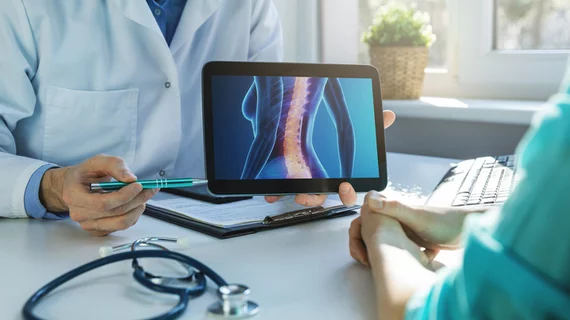
Showing patients their medical images might encourage them to take a more proactive approach to their health, according to new research published in PLOS Medicine.
The meta-analysis of more than 9,000 participants revealed that when patients who undergo medical imaging are shown their results alongside a personalized review of their own disease risk, they are more likely to reduce risky behaviors, including following a healthier diet and routinely exercising.
“There is ongoing clinical and research interest in determining whether providing personalized risk information could motivate risk-reducing health behaviors,” corresponding author Garreth J. Hollands, with the behavior and health research unit at the University of Cambridge, and colleagues explained. “One such intervention involves feeding back images generated via medical imaging technologies that assess an individual’s current disease status or risk.”
The meta-analysis included controlled trials of adults who had undergone medical imaging procedures to assess health status and disease risk, for which personal risk may be reduced by changing their lifestyles. Monitored behaviors included smoking, medication use, physical activity, diet, oral hygiene habits, sun protection, tanning booth use, blood glucose testing, skin self-examination and foot care.
To quantify how image visualization might impact healthy behaviors, participants were divided into two groups—one who received personalized risk information via visual feedback from medical imaging (CT scans, ultrasounds, radiographs, etc.), and those who were given health information and advice without viewing their imaging.
Benefits from the intervention were most pronounced when it came to the participants smoking habits, diets, physical activity and oral hygiene. Some of the studies included in the analysis also indicated that personalized imaging feedback resulted in more thorough skin self-examinations and increased foot care.
“Medical imaging scans are used ever more widely by healthcare professionals,” the authors wrote. “By gathering together the existing research, this study suggests that showing the scan results to patients to highlight the state of their health could motivate them to behave in a healthier way.”
Though the results of their work are encouraging, experts believe further trials that mitigate the risk of bias are needed to solidify their findings.
More on health screenings:
Breast cancer is overdiagnosed in 15% of screenings
Ultrasound images reveal how smoking before conceiving impacts embryonic development
Significant uptick of late-stage cancer diagnoses attributed to COVID
Rural outreach initiative produces significant increase in lung cancer screenings

In addition to her background in journalism, Hannah also has patient-facing experience in clinical settings, having spent more than 12 years working as a registered rad tech. She began covering the medical imaging industry for Innovate Healthcare in 2021.