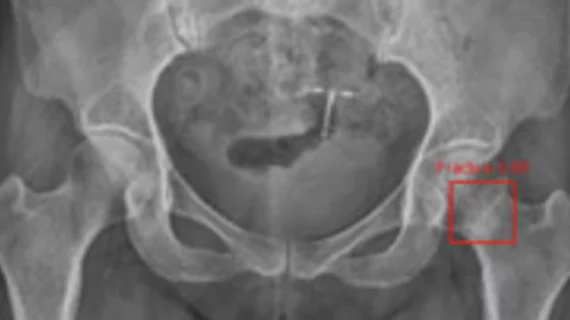
Radiologists use diagnostic imaging to non-invasively look inside the body to help determine the causes of an injury or an illness, and confirm a diagnosis. Providers use many imaging modalities to do so, including CT, MRI, X-ray, Ultrasound, PET and more.
Chest CT is routinely performed for things like lung cancer screening, coronary calcium assessment and pulmonary nodule surveillance, but the modality also can be used to extract additional information.
By highlighting subtle abnormalities that could otherwise be overlooked, an algorithm could potentially serve as an additional safety net when radiographic findings are indeterminate.
A new treatment is now an FDA-approved option for patients with essential tremor. On July 11, the agency approved using an MRI-guided focused ultrasound to treat essential tremor cases that haven’t responded to medication.
Radiologists looking to lend their skills to people in developing regions should know certain things before booking their travel. For example, in Tanzania, “you can be fined and even detained if you enter the country on a tourist visa to provide medical services.”
Most collegiate hoopsters pounding the court day after day show no signs of serious knee injury. However, an MRI-based study published online June 22 in the Clinical Journal of Sport Medicine shows that no pain is no assurance of no damage.
Contrary to popular physician perception, advanced practice clinicians (APCs)—primarily nurse practitioners and physician assistants—don’t spur more low-value imaging orders, antibiotic prescriptions or specialist referrals than physicians do.
Baseball players experiencing medial elbow pain are more precisely imaged by a combination of stress ultrasound and magnetic resonance arthrography (MRA) than by either of those two modalities alone, even though the latter modality is widely considered the gold standard in its own right.
A new study from the National Institutes of Health’s National Institute of Neurological Disorders and Stroke shows that stroke patients who have more severe breaches of the blood-brain barrier might be at greater risk for severe bleeding in the brain after invasive stroke treatment.
Oncologists are putting pressure on pediatricians to more strongly recommend the HPV vaccine, saying their endorsement will help prevent cancer decades down the line.
The American Roentgen Ray Society (ARRS) previewed its 2016 ARRS Abdominal and Pelvic MR Imaging Symposium earlier this week. The symposium will be held at the Renaissance Baltimore Harborplace Hotel in Baltimore, Md., from Sept. 30 to Oct. 1, 2016.