Radiologists use diagnostic imaging to non-invasively look inside the body to help determine the causes of an injury or an illness, and confirm a diagnosis. Providers use many imaging modalities to do so, including CT, MRI, X-ray, Ultrasound, PET and more.
Chest CT is routinely performed for things like lung cancer screening, coronary calcium assessment and pulmonary nodule surveillance, but the modality also can be used to extract additional information.
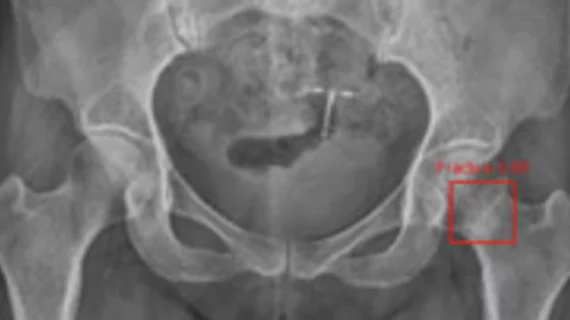
By highlighting subtle abnormalities that could otherwise be overlooked, an algorithm could potentially serve as an additional safety net when radiographic findings are indeterminate.
FujiFilm Medical Systems USA Inc. and Stryker Imaging, a worldwide manufacturer and supplier of orthopedic medical devices, have finalized a sales agreement.
IDC (Imaging Dynamics Company) has announced unaudited results of operations for the third quarter 2005 which has the company showing gains over last year.
Maxant Technologies plans to introduce its latest digital viewing workstation called MediPort at this year's Radiological Society of North America (RSNA) at the end of the month.
Data protection and storage security provider Atempo has unveiled Time Navigator Security and Compliance Manager (SCM), a new storage security system which is designed to protect "in-flight" and "at-rest" digital information, the company said.
NightHawk Radiology Holdings Inc. has purchased American Teleradiology Inc., a Virginia-based provider of overnight and off-hours teleradiology services.
Researchers at Purdue University are investigating a new type of ultra-sensitive medical imaging technique which shines a laser through the skin to detect tiny gold nanorods injected into the bloodstream.
GE Healthcare's (GEHC) announced that its Lunar iDXA, a new bone mineral density system designed for the treatment of osteoporosis, has received FDA clearance.