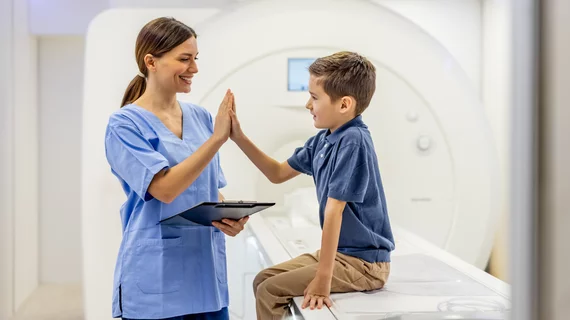
Radiologists use diagnostic imaging to non-invasively look inside the body to help determine the causes of an injury or an illness, and confirm a diagnosis. Providers use many imaging modalities to do so, including CT, MRI, X-ray, Ultrasound, PET and more.
Chest CT is routinely performed for things like lung cancer screening, coronary calcium assessment and pulmonary nodule surveillance, but the modality also can be used to extract additional information.
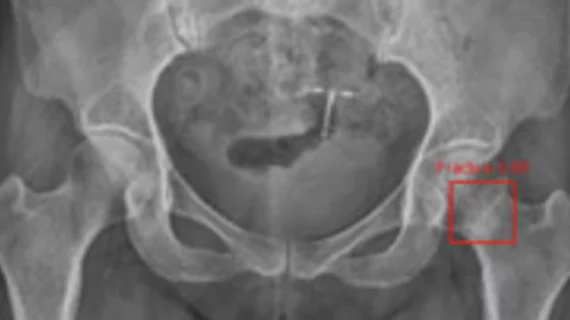
By highlighting subtle abnormalities that could otherwise be overlooked, an algorithm could potentially serve as an additional safety net when radiographic findings are indeterminate.
General Electric Co. (GE) on Tuesday unveiled an agreement to sell patient monitoring and clinical information systems firm Spacelabs Medical to OSI Systems Inc. to comply with a requisite of GE's acquisition of Instrumentarium Corp.
The diagnosis of small bowel disease appears to have taken a major step forward, thanks to an ingestible video camera that produces digital images of the small intestine.
M.D. Anderson Cancer Center in Orlando, Fla., has begun using a procedure called tomotherapy -- a form of image-guided intensity modulated radiation therapy (IMRT) -- to treat patients with head, neck, prostate, lung and/or breast cancer.
Emageon today announced an agreement with ThedaCare, an integrated delivery system in Central Wisconsin, to provide advanced visualization, content management and workflow integration of medical imaging throughout its multi-facility enterprise.