
Key trends in medical imaging systems at RSNA 2025
Photon-counting CT once again dominated discussions on the exhibit floor at the Radiological Society of North America (RSNA) 2025 meeting, as vendors continued to expand their pipelines and signal long-term shifts in the CT market, according to Signify Research. Five vendors were showing photon-counting CT systems this year on the expo floor.
“It’s been a big year for photon-counting CT again,” said Sarah-Jane James, senior imaging market analyst for Signify Research, who spoke with Radiology Business at RSNA. While recent regulatory approvals have occurred outside the U.S., vendors are increasingly bringing these systems to RSNA to showcase their progress.
“It was nice to see NeuSoft’s photon-counting CT system in person,” she said, which had gained Chinese regulatory approval earlier in 2025, adding that the company is expected to target the U.S. market in the near future.
GE HealthCare unveiled a FDA 510(k)-pending Photonova Spectra photon-counting CT system at RSNA, while Canon Medical Systems also displayed its work-in-progress photon-counting CT system.
Despite enthusiasm from early adopters, James said photon-counting CT faces cost barriers that limit widespread uptake. “We are still at that point where the cost is too prohibitive for the vast majority of healthcare settings to acquire it,” she said.
However, additional market entrants could accelerate clinical validation and reduce costs over time. James added that broader adoption could align with Siemens’ long-term outlook that photon-counting CT will eventually overtake conventional CRT system purchases.
“It does reaffirm Siemens overarching projection that by 2040, every CT system will be a photon-counting CT system,” she said.
Beyond photon-counting detectors, vendors are exploring niche CT configurations to stand out in an increasingly crowded high-end CT system market. Canon showed a, interesting work-in-progress tilting, upright and weight-bearing CT system.
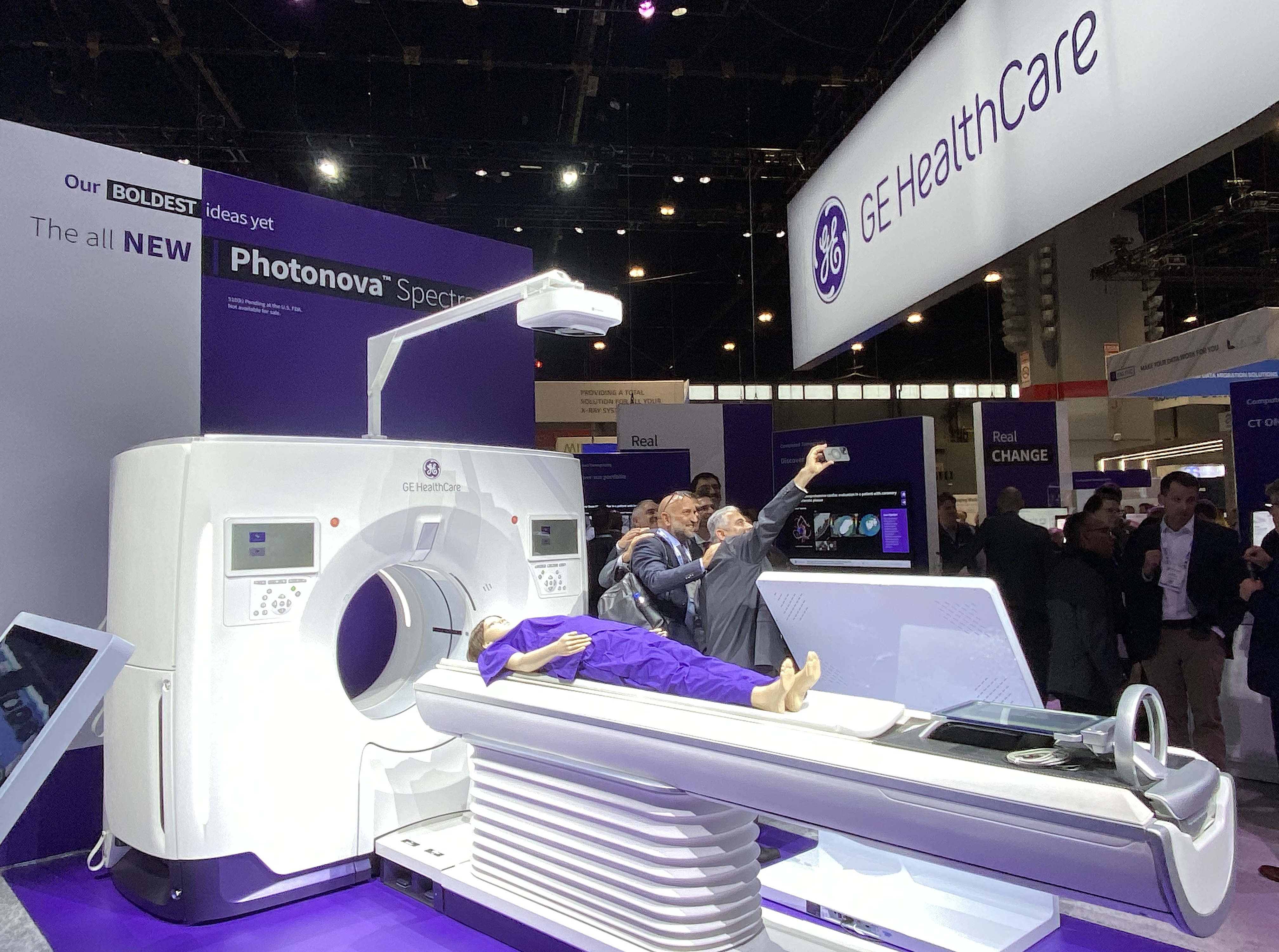
GE Healthcare unveiled its FDA 510(k)-pending Photonova Spectra photon-counting CT system at RSNA 2025. The spectral photon-counting CT system offers 8-bins of energy resolution and uses the vendor's Deep Silicon detector technology.
“It’s become a bit more difficult to distinguish between the very high end systems that we have these days,” James said. Vendors are looking to offer new niche system configurations to increase their total addressable market.
Conventional CT innovations were present, but largely overshadowed. “It has been quite overshadowed by the very exciting photon-counting announcements,” James said.

Canon unveiled a work-in-progress photon-counting ST system at RSNA 2025.
AI a major theme across imaging systems
Artificial intelligence was another unifying theme across imaging modalities, particularly for image reconstruction and workflow optimization.
“It’s all about how can we increase image quality without compromising on scan speed when it comes to MRI, or on dosage with CT,” James said. She added that AI-driven automation, such as isocentering cameras and coil positioning in MRI, has become standard practice. These tools speed up that planning and scan time while helping address workforce shortages by reducing errors and enabling less experienced staff to run scans sooner.
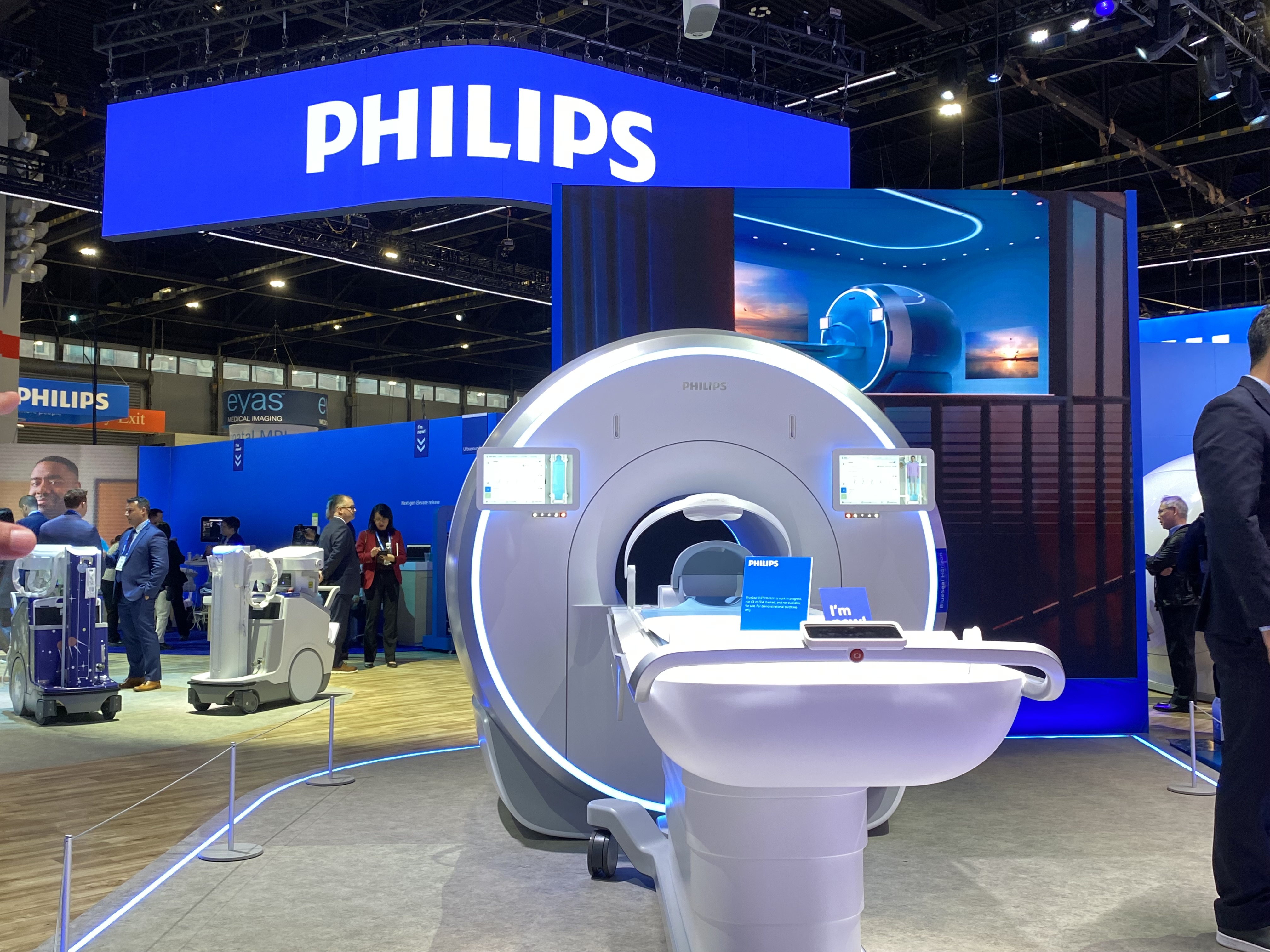
Philips unveiled its 3.0T BlueSeal MRI system at RSNA 2025. This ultra-low helium system is completely sealed to eliminate boil-off and the need for a quench pipe, making it easier to install the system and less expensive to maintain.
Several new MRI systems launched at RSNA
MRI also saw a strong showing, with multiple system launches. James highlighted the trend toward sealed systems that greatly reduce the amount of helium coolant for the magnet. She said the two big launches in this area were Philips’ 3T BlueSeal system, and GE Healthcare’s 1.5T Signa Sprint with Freelium. She said the momentum around sealed, low-helium magnets is likely to continue.
“Long term when it comes to MRI, helium-free will become the standard for systems,” she said.
The design of these systems that do not require a quench pipe expands the number of locations where you can install an MRI. This could help address access constraints for one of the most capacity limited modalities. It also makes installation in mobile trucks easier, or retrofitting hospital or clinic spaces for a new MRI system. These sealed scanners also do not require topping off due to helium loss
While promoted as being helium-free, such systems still require the chemical, but use just a fraction of the amount needed for conventional MRI systems, at between 7 to 15 liters.
PET-CT sees rapid expansion
In molecular imaging, James said PET-CT continues to drive innovation and purchasing decisions.
“Cardiac is the biggest application for PET-CT that we’re seeing at the moment,” she said, noting that the modality represents the largest growth segment by unit shipments. The market is currently split between highly specialized niche systems and ultra-premium, wide-field-of-view scanners capable of total-body imaging.
James sees parallels between PET and SPECT as digital technologies mature. “When we look at the digitalization trend, PET is chosen nearly every single time,” James said. “The digital preference is really heavy and I expect that SPECT will follow a similar trajectory.”
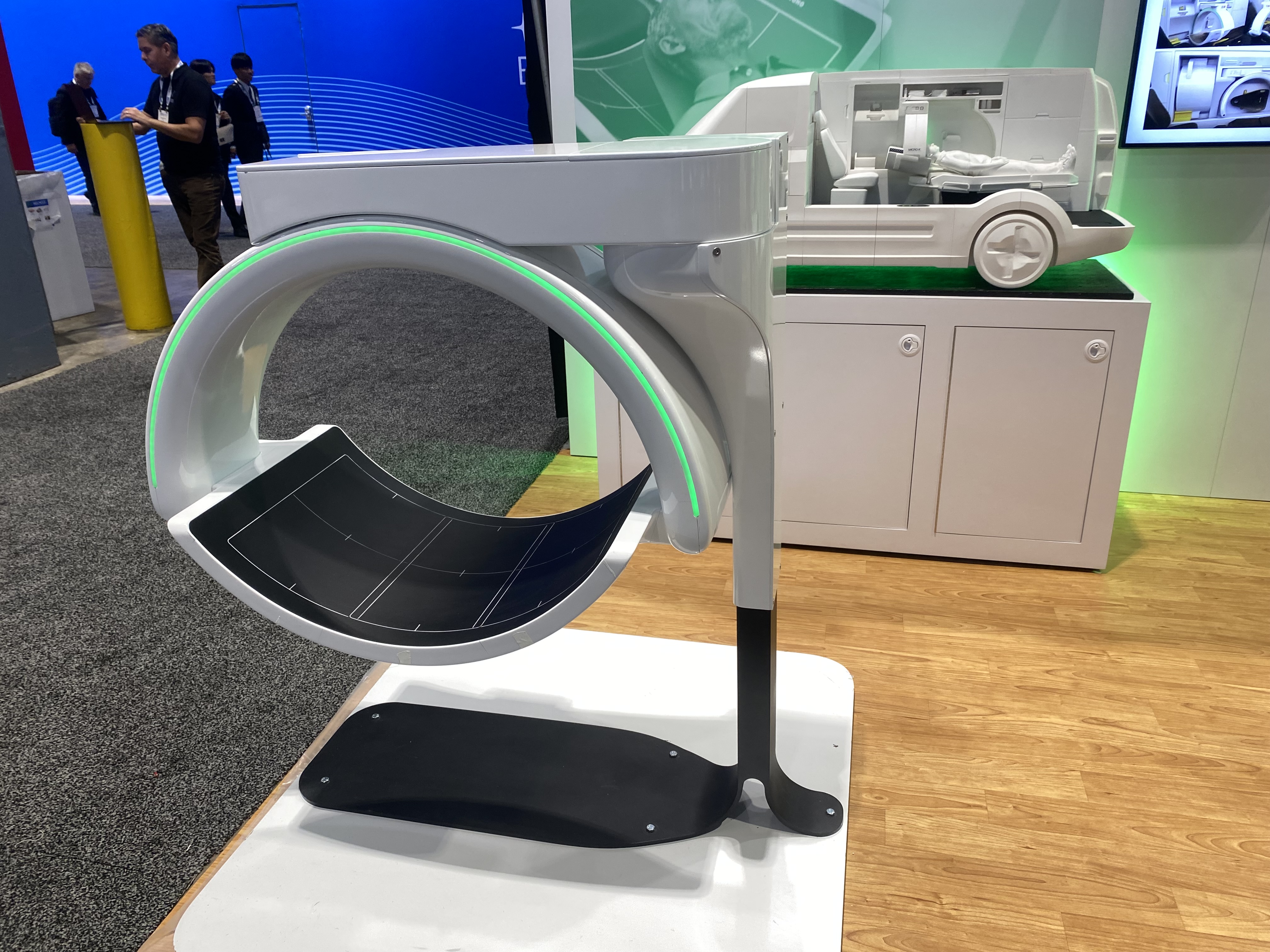
An extremely compact and lightweight cold-cathode head CT scanner from Micro-X that will be used in ambulances to scan suspected stroke patients in Australia to see if pre-hospital scans can speed diagnosis and improve door-to-tPA drug administration times.
Cold-cathode X-ray systems on the RSNA show floor
Emerging X-ray technologies also drew attention, particularly cold cathode X-ray systems from smaller, disruptive vendors. Nanox displayed its new Arc cold-cathode imaging system that features five emitters that enable tomosynthesis imaging. Micro-X showed off its FDA-cleared light-weight cold-cathode Rover mobile X-ray system, and its work-in-progress cold-cathode CT system.
James said she has followed Micro-X closely and expects progress toward commercialization of its ultra-lightweight CT gantry. This system will be tested for immediate stroke imaging in ambulances across Australia in the coming year.
“There are a lot of interesting applications there,” she said, emphasizing the possibilities in mobile stroke imaging. “That’s the difference between a patient living or dying because they can’t administer the medication until they are confirming a brain bleed.”

X-ray imaging and tomosythesis dataset produced from the Nanox cold-cathode Arc system at RSNA 2025.
While challenges remain, James said the increasing availability of real-world images from these emerging technologies is an important milestone. “We have got images now, which is exciting,” she said, noting that visual proof is key to overcoming skepticism ahead of broader commercialization.
Cold-cathode X-ray technology has existed for years, but it was limited because the short lifespan of the tubes. Both vendors said they have overcome this issue. Micro-X claims its tube should last 30 years, but time will tell.
Cold-cathode technology does not generate the massive amount of heat generated by conventional X-ray tubes. This translates into much smaller, lightweight X-ray systems.

Dave Fornell has covered healthcare for more than 17 years, with a focus in cardiology and radiology. Fornell is a 5-time winner of a Jesse H. Neal Award, the most prestigious editorial honors in the field of specialized journalism. The wins included best technical content, best use of social media and best COVID-19 coverage. Fornell was also a three-time Neal finalist for best range of work by a single author. He produces more than 100 editorial videos each year, most of them interviews with key opinion leaders in medicine. He also writes technical articles, covers key trends, conducts video hospital site visits, and is very involved with social media. E-mail: [email protected]