
Certain knee injections may cause osteoarthritis to progress more rapidly, new MRI data suggest
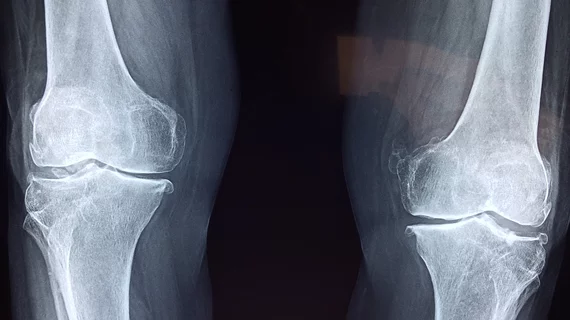
New MRI findings suggest that certain injections used to treat knee pain in osteoarthritis patients may actually cause the condition to progress.
Published in the journal Radiology, the new data compared two types of injections—corticosteroids and hyaluronic acid-based—to determine their impact on joint degeneration. Using MRI exams to monitor progression, experts determined that corticosteroid injections cause OA to progress more rapidly, even after just one treatment.
“Our study directly challenges a common clinical practice: the use of corticosteroid injections for knee osteoarthritis symptom relief,” Upasana Upadhyay Bharadwaj, MD, a former research fellow in the Department of Radiology at the University of California, San Francisco, and colleagues noted. “It presents robust evidence that corticosteroids accelerate structural knee degeneration, even after a single injection.”
For the study, researchers utilized whole-organ, semi-quantitative MRI evaluations (WORMS). A total of 210 patients who were part of the large, multicenter, longitudinal Osteoarthritis Initiative study underwent multiple MRIs over a period of two years. Participants who received an injection were imaged before, at the time of and two years after their treatment.
Of those who received injections, 44 were given corticosteroids, while another 26 were treated with hyaluronic acid. The rest of the participants included in the analysis underwent MRI as well, though they did not receive an intra-articular injection.
Researchers observed more pronounced progression of disease in the corticosteroid group compared to both the hyaluronic acid group and controls. In contrast, the hyaluronic acid group showed decreased deterioration. MRI exams also indicated that hyaluronic acid slowed the progression of OA once injected, as the control group who did not receive any injections displayed more joint damage throughout the series of MRIs.
“The most striking finding is that a single corticosteroid injection led to significantly greater structural damage in the knee joint over two years, especially in cartilage, while hyaluronic acid injections not only avoided this damage but actually showed reduced joint deterioration post-injection,” Bharadwaj said. “Corticosteroids are known to reduce inflammation but also impair the repair mechanisms of cartilage and can inhibit matrix synthesis.”
She added that corticosteroids could weaken cartilage, making joints more susceptible to deterioration. It is her hope that these new findings may lead to more “judicious use” of corticosteroids in pain management.
“Given their widespread use, these findings could influence clinical guidelines and patient care decisions, encouraging more cautious use and stronger consideration of alternatives like hyaluronic acid,” she said. “The public impact is significant, as osteoarthritis is a major global cause of disability, and millions receive such injections annually.”
Learn more about the findings here.

In addition to her background in journalism, Hannah also has patient-facing experience in clinical settings, having spent more than 12 years working as a registered rad tech. She began covering the medical imaging industry for Innovate Healthcare in 2021.