
Department of Energy, Shine working on $263M deal to establish Mo-99 supply in US
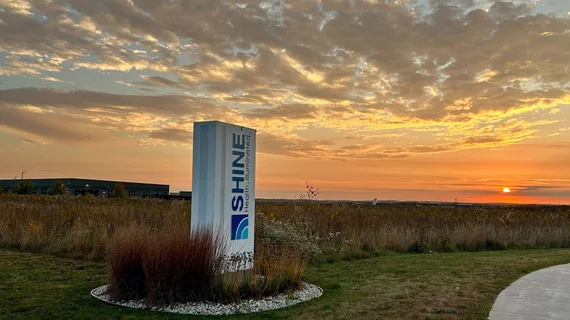
The Department of Energy is set to front a nuclear fusion technology company upwards of $263 million to establish the first domestic supply of a critical medical isotope.
Janesville, Wisconsin-based Shine Technologies announced the commitment from the U.S. DOE’s Office of Energy Dominance Financing on Thursday. While the loan is subject to conditions, if approved, it would fund the completion of Chrysalis—Shine's first-of-its-kind medical isotope production facility.
Chrysalis has the potential to establish the first domestic supply of molybdenum-99 (Mo-99), a critical medical isotope utilized in tens of thousands of procedures every day in the United States alone. Currently, the U.S. relies on foreign reactors for Mo-99; these reactors have become more vulnerable to being sidelined as they continue to age, which puts the supply chain at risk.
“Chrysalis proves that fusion doesn't need to wait for future breakthroughs to create value for millions of people today,” Greg Piefer, founder and CEO of Shine, said in a statement. “This conditional commitment is a critical catalyst that accelerates our scale-up of the world’s largest medical isotope facility and ensures a secure, domestic source of critical medical isotopes."
Shine’s method uses fusion and a liquid uranium target that is recycled, reducing waste and operational costs. The company expects to produce millions of doses per year once the new facility opens.
Chrysalis is a result of more than 15 years of collaboration between Shine, U.S. National Laboratories and the National Nuclear Security Administration. When finished, Chrysalis will be the largest isotope production facility in the world.
Though the loan is expected to finalize, Shine and the DOE first must meet certain technical, legal, environmental and financial conditions.
Read more here.

In addition to her background in journalism, Hannah also has patient-facing experience in clinical settings, having spent more than 12 years working as a registered rad tech. She began covering the medical imaging industry for Innovate Healthcare in 2021.