
PET/CT should be first-line tool for patients with fever of unknown origin, study says
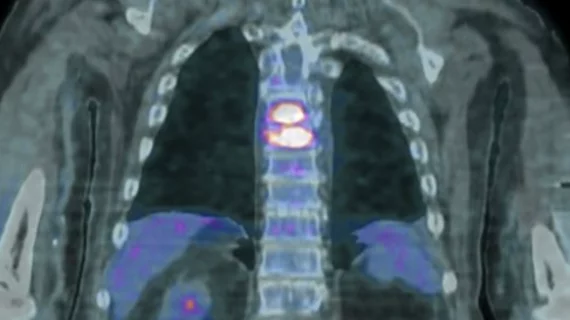
New data suggest that PET/CT imaging could play a larger role in the evaluation of fever of unknown origin—one of the most difficult diagnostic tasks in medicine.
Such fevers can be difficult to assess due to the many potential causes. There is currently no gold standard diagnostic exam for assessing fever of unknown origin, but imaging, 18F-FDG PET/CT specifically, could play a critical role, according to recent findings published in the Journal of Nuclear Imaging.
Results from the study suggest the modality could directly influence clinical management in nearly three-quarters of impacted patients.
“Although predominantly used in oncology, 18F-FDG PET/CT has demonstrated significant diagnostic utility in the evaluation of several inflammatory and infectious diseases. Its application in [fever of unknown origin] is increasing, although its diagnostic value remains debated,” Domenico Albano, MD, a nuclear medicine physician at the University of Brescia, Italy, said in a July 23 statement from the Society of Nuclear Medicine and Molecular Imaging, which publishes the journal. “In this study, we sought to investigate the diagnostic performance and the clinical impact of 18F-FDG PET/CT on the management of patients with [fever of unknown origin].”
The retrospective study included 929 patients from 12 centers who underwent 18F-FDG PET/CT for this clinical concern. Investigators compared imaging findings with patients' final diagnoses, which were established through labs, imaging, pathology and at least six months of clinical follow-up data. The team also evaluated the impact of PET/CT on patient management decisions and identified factors associated with positive imaging findings.
The group determined that PET/CT directly altered clinical management in approximately 75% of patients. Of the entire group, 549 had positive PET/CT findings, while 380 had negative scans. Researchers identified several factors associated with a higher likelihood of a positive examination, including elevated C-reactive protein levels, a high neutrophil-to-lymphocyte ratio, the presence of fever at the time of imaging and a shorter duration of prior antibiotic therapy.
These findings, the team suggested, indicate that PET/CT has immense potential in addressing this diagnostic challenge.
“Based on these findings, 18F-FDG PET/CT has the potential to be a first-line tool in the work-up of [fever of unknown origin], rather than a second- or third-line test,” said Albano. “In addition, the integration of clinical and biochemical parameters may help improve performance of 18F-FDG PET/CT, reducing the time to diagnosis and preventing unnecessary treatments and investigations.”
Read more here.

In addition to her background in journalism, Hannah also has patient-facing experience in clinical settings, having spent more than 12 years working as a registered rad tech. She began covering the medical imaging industry for Innovate Healthcare in 2021.