
RSNA: Philips nabs FDA approval for PET/MR system
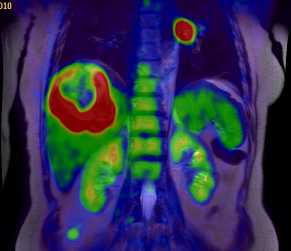 |
| PET/MR image of an 80-year-old male colorectal cancer patient. Image acquired with Philips PET/MR. Source: University of Geneva |
“We are using the same 3T MRI and PET systems that have already entered the U.S. market,” Troy Havens, senior product manager of nuclear medicine for PET for Philips Healthcare, said in an interview at RSNA. “We used the sequential imaging model that was used on our PET/CT system, as we haven’t found the clinical data that necessitates the simultaneous image acquisition.”
Mount Sinai School of Medicine in New York City and University Hospitals/Case Western Reserve University in Cleveland, will house the first Philips combined, whole body PET/MR systems in the U.S.
“Mount Sinai, which is high-volume research and clinical institution, will perform MR exams on this system Mondays, Wednesdays and Fridays, and conduct PET/MR research Tuesdays and Thursdays—which is allowed by the flexibility of the machine,” said Havens, who added that University Hospitals/Case Western’s use of PET/MR will be focused on oncologic and pediatric imaging.
“The ability to use only one sedation for a child to undergo both a PET and an MR exam is a huge safety advantage with dose reduction,” he added.
The system features Philips' Time-of-Flight (ToF) technology, Astonish TF, a technology for PET scanners that is designed to enhance image quality, according to company. It is combined with the soft-tissue contrast of 3T MR to image disease as it proliferates in soft tissue.