
Simple measurement from routine X-rays accurately predicts post-op lung cancer outcomes
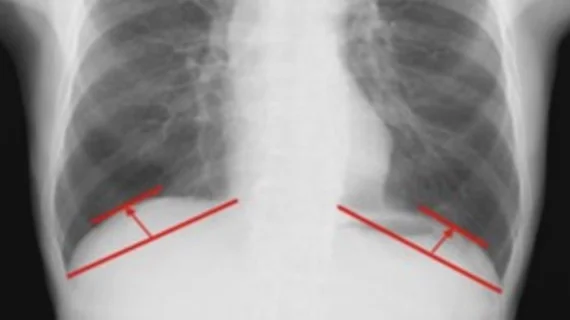
A simple measurement taken on routine chest radiographs could offer valuable insight into how patients will recover from lung surgery.
For the first time, research has identified diaphragmatic dome height measured on chest X-rays as an indicator of what patients’ post-op recovery will look like following surgery for cancer or other lung disorders. Dome height is indicative of diaphragmatic function, which is key for breathing. Lower height could signal poor function and, therefore, may allude to inefficient breathing after lung surgery, researchers proposed.
The new data suggest that lower pre-operative diaphragmatic dome height is associated with worse long-term post-op outcomes and a higher likelihood of respiratory-related death. Experts involved in the analysis believe their findings could represent a low-cost, easily accessible option to better stratify patient risk prior to surgery.
“By evaluating [diaphragmatic dome height] using routine chest radiographs, postoperative prognosis can be predicted without the need for additional examinations,” explained Masaya Noguchi, a physical therapist at Kindai University Hospital, Japan. “This enables early and simple identification of high-risk patients and allows clinicians to tailor treatment strategies accordingly.”
To test this theory, they retrospectively reviewed the cases of over 300 patients who had been diagnosed with either lung cancer or obstructive ventilatory disorder and underwent lobectomy between 2017 and 2024. Each patient completed chest radiographs one month prior to their surgery, allowing the team to acquire measurements to compare alongside long-term outcomes. Low diaphragmatic dome height was considered 18.8 mm or less, while high height was 18.8 mm or higher.
Through this, the team determined that patients with low diaphragmatic dome height were significantly more likely to die within three years of their surgery (85% versus 70% for the high-height group). They also were more likely to die of respiratory causes, the group noted. The measurement remained a strong indicator of outcomes even after accounting for other factors, such as tumor size, stage and pulmonary function.
The team suggested their findings warrant consideration in future treatment planning for patients with lung disorders.
“In the future, incorporating [diaphragmatic dome height] into clinical practice may allow for more efficient and personalized treatment strategies,” Noguchi said. “It also has the potential to improve long-term outcomes and quality of life for patients.”
Read more here.

In addition to her background in journalism, Hannah also has patient-facing experience in clinical settings, having spent more than 12 years working as a registered rad tech. She began covering the medical imaging industry for Innovate Healthcare in 2021.