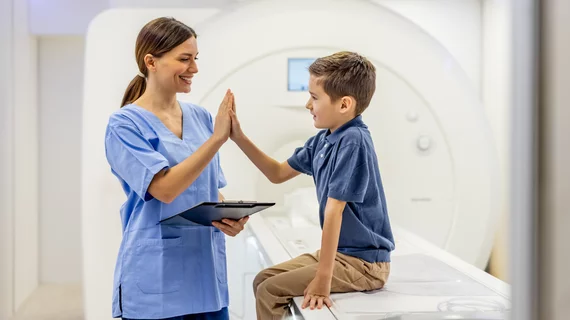
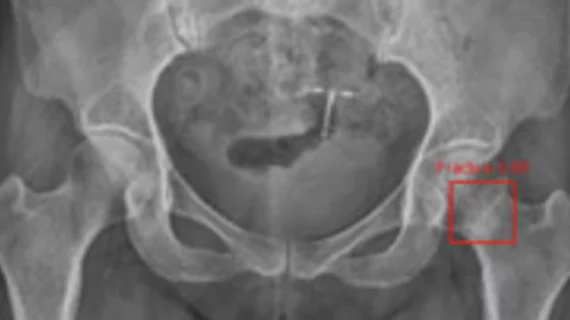
Radiologists use diagnostic imaging to non-invasively look inside the body to help determine the causes of an injury or an illness, and confirm a diagnosis. Providers use many imaging modalities to do so, including CT, MRI, X-ray, Ultrasound, PET and more.
Chest CT is routinely performed for things like lung cancer screening, coronary calcium assessment and pulmonary nodule surveillance, but the modality also can be used to extract additional information.
By highlighting subtle abnormalities that could otherwise be overlooked, an algorithm could potentially serve as an additional safety net when radiographic findings are indeterminate.
Spacelabs Healthcare Inc., a diversified global developer, manufacturer and seller of medical systems and services, was listed and began trading on the AIM in London on Oct. 31, 2005.
The 2nd Edition of the Atlas of Clinical Positron Emission Tomography by Richard Wahl, MD, Emeritus Professor Michael Maisey and Sally Barrington, MD, was released at the recent RSNA meeting in Chicago.
At this year's Radiological Society of North America meeting, vendors displayed an arsenal of printing solutions to meet the needs of any size healthcare facility. Compact designs and exceptional resolution are standard features of conventional medical im
Speech recognition and voice dictation software vendors embraced the term 'real-time' at this year's Radiological Society of North America show in Chicago, highlighting systems that efficiently and accurately convert voice to text and improve report turar
IDX Systems Corp. has reached an agreement to settle two shareholder lawsuits filed after the announcement that GE Healthcare would acquire the Burlington, Vt.-based vendor.
Varian Medical Systems Inc. has received FDA 510(k) clearance for a new proton therapy eye dose calculation module that has been made part of the company's Eclipse treatment planning system for planning radiation therapies for the treatment of cancer.