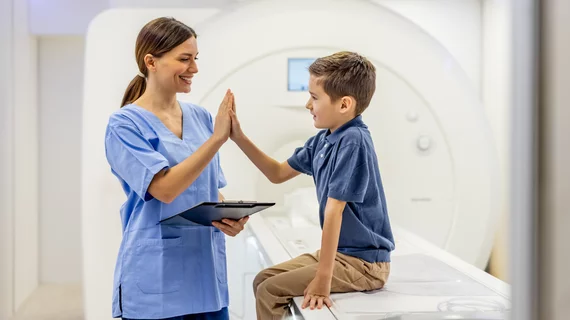
Radiologists use diagnostic imaging to non-invasively look inside the body to help determine the causes of an injury or an illness, and confirm a diagnosis. Providers use many imaging modalities to do so, including CT, MRI, X-ray, Ultrasound, PET and more.
Chest CT is routinely performed for things like lung cancer screening, coronary calcium assessment and pulmonary nodule surveillance, but the modality also can be used to extract additional information.
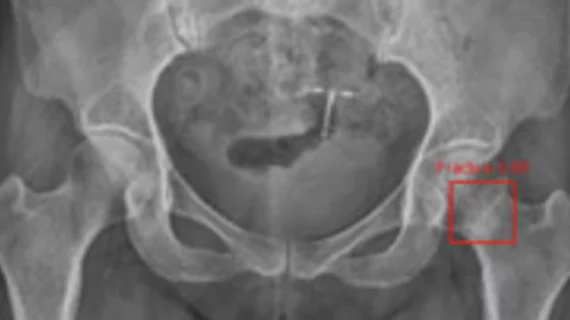
By highlighting subtle abnormalities that could otherwise be overlooked, an algorithm could potentially serve as an additional safety net when radiographic findings are indeterminate.
As a result of Agfa's acquisition of GWI AG earlier this year, the companies have announced a new portfolio which brings together the IMPAX PACS application and ORBIS.
The new iHealthRecord was launched this week as a result of a multi-year effort led by Medem, a national physician-patient communication network, and a coalition of national healthcare leaders.
Star Micronics America Inc. has announced that its TSP800 prescription printer has been certified for use with PRAXIS Electronic Medical Record (EMR) software.
Siemens Medical Solutions highlighted its new all-digital SONOLINE G40 ultrasound system this week at the 53rd annual clinical meeting of the American College of Obstetricians and Gynecologists (ACOG) in San Francisco.
TeraRecon Inc. has released new software updates for its Aquarius product family designed for improved reading and reporting of Multidetector CT (MDCT) and magnetic resonance (MR) studies using modern 64-slice CT (computed tomography) scanners.
ABLE Software Corp. has announced a new version of its 3D-DOCTOR software for vector-based 3D imaging, modeling and measurement of CT (computed tomography), MRI (magnetic resonance images), microscopy and volumetric images.