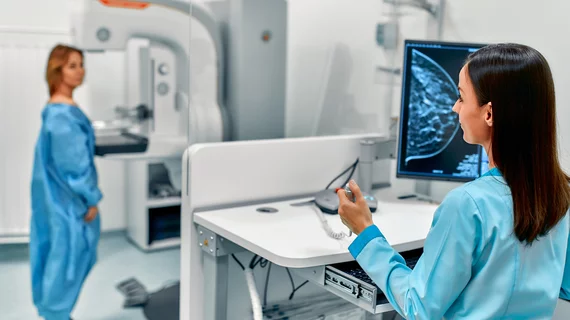
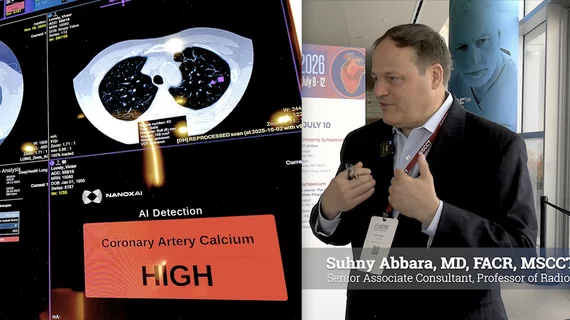
Diagnostic screening programs help catch cancer, abnormalities or other diseases before they reach an advanced stage, saving lives and healthcare costs. Screening programs include, lung, breast, prostate, and cervical cancer, among many others.
New research could provide useful information for cancer registries and potentially help policymakers better evaluate screening outcomes to develop more effective guidelines.
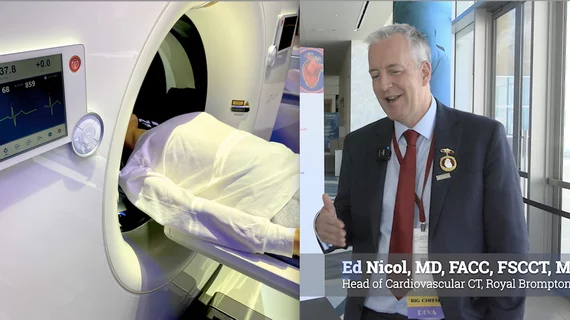
Former SCCT president Ed Nicol, MD, knows there has been interest in the potential of automated CT exams. However, he isn't so sure they are possible at this point in time for a number of reasons.
The software was trained using more than 700 images and achieved a breast density classification accuracy of 89%, experts recently shared in Radiology: Artificial Intelligence.
Women with breast arterial calcifications are 51% more likely to develop heart disease or have a stroke, experts explained recently in Circulation: Cardiovascular Imaging.
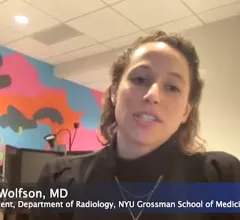
In an exclusive video, Stacey Wolfson, MD, and Beatriu Reig, MD, MPH, from the NYU Grossman School of Medicine, discuss the findings of their new analysis.
There are not yet consensus-based guidelines available for screening women with dense breast tissue, so researchers at Mayo Clinic recently developed a set of recommendations regarding supplemental screening.
The analysis examined 620 cancer imaging studies from the top 25 imaging-related journals to come up with publication-to-incidence and publication-to-mortality ratios.
The latest U.S. Food and Drug Administration data on mammography systems installed nationwide shows DBT systems are rapidly replacing traditional 2D full field digital mammography units.