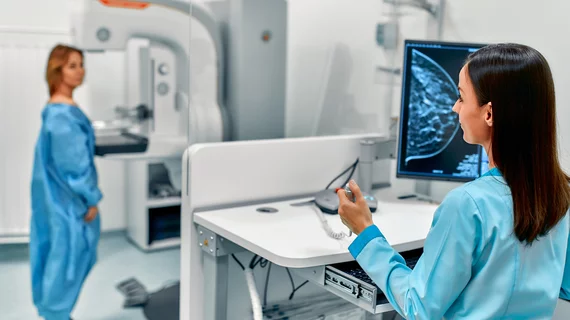
Diagnostic screening programs help catch cancer, abnormalities or other diseases before they reach an advanced stage, saving lives and healthcare costs. Screening programs include, lung, breast, prostate, and cervical cancer, among many others.
New research could provide useful information for cancer registries and potentially help policymakers better evaluate screening outcomes to develop more effective guidelines.
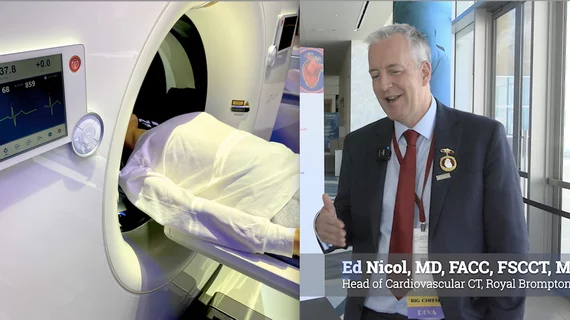
Former SCCT president Ed Nicol, MD, knows there has been interest in the potential of automated CT exams. However, he isn't so sure they are possible at this point in time for a number of reasons.
Magnetic resonance-guided focused ultrasound thalamotomy is immediately effective and requires a shorter hospital stay compared to traditional methods such as deep brain stimulation.
Arteriovenous malformations in the brain are best obliterated with surgery following preoperative embolization. However, radiosurgery is a considerably less costly option that may suffice in some cases.
A new startup—Hyperfine—and its visionary leader Jonathan Rothberg are creating a new, portable MRI machine they believe can revolutionize the way doctors think about the technology.
A group of U.S. researchers analyzed literature on the topic, summarizing imaging findings to help radiologists identify signs of vaping-related lung injuries. The results were published Oct. 8 in the American Journal of Roentgenology.
An algorithm designed to unfold MRI scans of the placenta may allow doctors to more accurately identify and treat issues with the organ during pregnancy, according to new research out of MIT’s Computer Science and Artificial Intelligence Laboratory.
A new high-performance, low magnetic-field MRI system developed, in part, by researchers at the National Institutes of Health (NIH) can produce higher-quality images of the lungs and heart and may be safer for patients with implanted devices.
Experts have theorized that there is a direct relationship between an individual’s amount of physical activity and the development of changes in the shoulder or hip. A team of UK researchers sought to test this theory by comparing MRI findings from rugby players and ballet dancers to healthy participants, sharing their findings in Clinical Radiology.
Trenton T. Kellock, MD, with Royal Inland Hospital’s Department of Medical Imaging in British Columbia, Canada, and colleagues performed a systematic review and meta-analysis of studies including more than 1,200 patients.