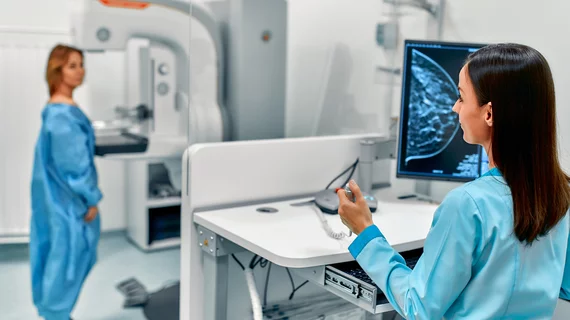
Diagnostic screening programs help catch cancer, abnormalities or other diseases before they reach an advanced stage, saving lives and healthcare costs. Screening programs include, lung, breast, prostate, and cervical cancer, among many others.
New research could provide useful information for cancer registries and potentially help policymakers better evaluate screening outcomes to develop more effective guidelines.
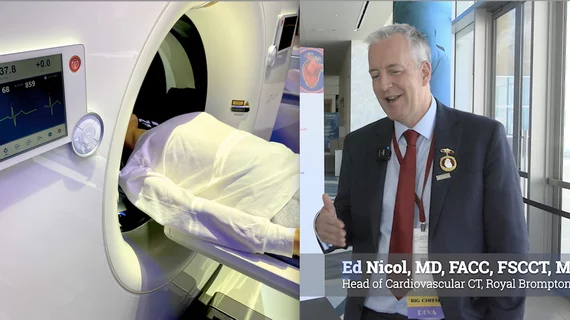
Former SCCT president Ed Nicol, MD, knows there has been interest in the potential of automated CT exams. However, he isn't so sure they are possible at this point in time for a number of reasons.
Two imaging findings—specifically, joint capsule swelling and thickness at the recess of the armpit—are useful to predict shoulder stiffness in patients with this particular injury.
Chinese researchers published a new case set of 51 patients with confirmed COVID-19, and found chest CT's sensitivity was much greater than real-time polymerase chain reaction lab testing.
Imaging experts can help diagnose vaping product use-associated lung injury and clear up confusion surrounding the epidemic, experts wrote in Radiology.
A number of those initially infected with the virus showed ground-glass opacities on their scans, particularly individuals who were not admitted to the ICU, researchers reported in the Lancet.
Healthcare institutions are encountering a growing number of gadolinium deposition disease cases. One expert recently discussed why radiologists should use current data to shed light on the topic and minimize their liability risk.
A significant portion of people who undergo a CT scan or x-ray after an electric scooter accident had injuries, according to a study presented at the 2019 RSNA annual meeting.
Bypassing the blood-brain barrier has long been a challenge for clinicians, but focused ultrasound can open specific pathways and help deliver targeted treatments to those suffering from the disease.