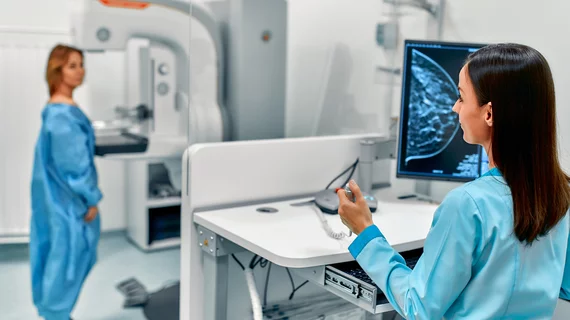
Diagnostic screening programs help catch cancer, abnormalities or other diseases before they reach an advanced stage, saving lives and healthcare costs. Screening programs include, lung, breast, prostate, and cervical cancer, among many others.
New research could provide useful information for cancer registries and potentially help policymakers better evaluate screening outcomes to develop more effective guidelines.
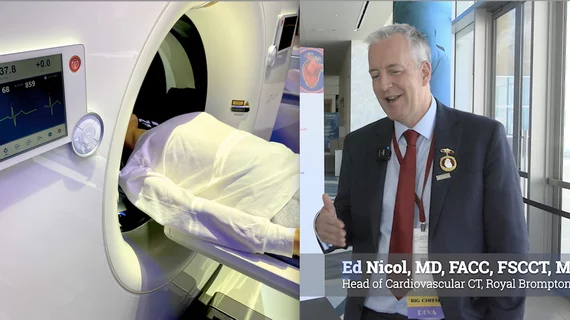
Former SCCT president Ed Nicol, MD, knows there has been interest in the potential of automated CT exams. However, he isn't so sure they are possible at this point in time for a number of reasons.
Generative artificial intelligence models have shown great potential for improving multiple aspects of the radiology field, but a new analysis cautions that they still require significant oversight.
Dana Smetherman, MD, CEO of the American College of Radiology, discusses the policy, which urges for more robust promotion of low-dose CT as a public health tool.
New research adds to the “strong evidence” supporting screening guidelines and highlights the importance of women adhering to clinical recommendations.
Advances in treatment are often credited with improving breast cancer outcomes, but new findings suggest the decrease in mortality may actually be due to improved screening initiatives.
John Simon, MD, CEO of SimonMed Imaging, says imaging has considerably advanced for noninvasive detection of disease and it may be time for it to play a greater role in annual physicals, especially in executive physical exams.