
Interventional radiologists now treat over 50% of liver cancer patients
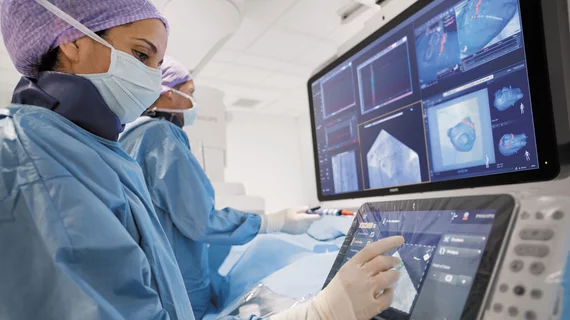
New data suggest that interventional radiologists are involved in treatment plans for more than half of Medicare patients with liver cancer.
Despite this, IRs account for a smaller share of overall physician payments, according to a new study published in the Journal of Vascular and Interventional Radiology. The data highlight trends in both treatment and reimbursement and put a spotlight on the growing role of IRs in cancer care.
Interventional radiology plays both supportive and therapeutic roles in liver cancer care. In addition to performing image-guided biopsies, venous access procedures and drainage, IRs deliver treatments directed at tumors, including transarterial chemoembolization (TACE), transarterial radioembolization (TARE) and percutaneous ablation. These procedures can be used alongside systemic therapies, as a primary treatments with curative intent or as a bridge to liver transplantation. Due to their less invasive nature, they often reduce recovery time and the need for hospitalization compared with other alternatives, earning them favor among both patients and providers.
“Liver cancer demands complex, multidisciplinary care and IRs have a central and transformative role to play on this care team,” study co-author Nishita Kothary, MD, FSIR, an interventional radiologist and professor at Stanford University School of Medicine, said in a release on the new findings.
Funded by the Society of Interventional Radiology (SIR), the study analyzed Medicare data from 2016 to 2021, which included approximately 110,000 patients annually. In addition to caseload, the team also analyzed physician payments and work relative value units (wRVUs).
Although physician payments and patient out-of-pocket costs increased substantially during the study period, oncology saw the most significant growth, with payments rising 72% over five years. IRs were involved in the treatment of approximately 51% of the patients; they received around 7.4% of the total payments and accounted for 11.7% of wRVUs. By comparison, medical oncology accounted for 52.5% of payments and 13.7% of wRVUs, while radiation oncology accounted for 5.4% and 4.5%.
The authors said these findings point to a potential cost-efficiency advantage for interventional radiology in liver cancer care, particularly as health systems and payers seek to manage spending.
“IR delivers the same quality of care at a fraction of the cost of oncologists, which is potentially more valuable to patients, payors and healthcare systems, especially when you consider the fact that recovery times are faster and hospital stays are often not required following an IR treatment,” noted co-author SIR Treasurer C. Matthew Hawkins, MD, MBA, FSIR, an interventional radiologist and professor at the Emory University School of Medicine.
The group suggested that their findings emphasize the importance of including the specialty in discussions about treatment pathways, resource allocation and alternative payment models.
Read more here.

In addition to her background in journalism, Hannah also has patient-facing experience in clinical settings, having spent more than 12 years working as a registered rad tech. She began covering the medical imaging industry for Innovate Healthcare in 2021.