
New PET tracer ‘cocktail’ could help find root cause of hospital-acquired infections
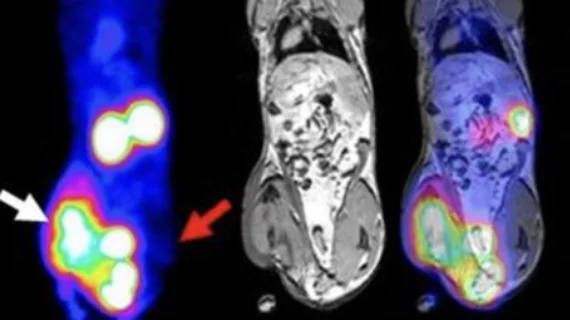
New research details how experts were able to combine three radiotracers to detect multiple strains of Pseudomonas aeruginosa in animal infection models.
Published in the Journal of Nuclear Medicine, the findings suggest that the cocktail could represent a promising approach to faster, more targeted diagnosis of a common hospital-acquired infection. P. aeruginosa can cause serious issues, particularly among critically ill and immunocompromised patients. Its ability to develop multidrug resistance makes timely identification important for guiding treatment. However, existing diagnostic methods can be slow and are not always able to distinguish bacterial infections from other inflammatory conditions.
Researchers led by Milos Petrik, PhD, associate professor at Palacký University in the Czech Republic, evaluated three gallium-68-labeled radiotracers in an attempt to better localize the infection origin—68Ga-PVDI, 68Ga-PVDII and 68Ga-PVDIII. Each tracer was designed to target a different type of P. aeruginosa. The team assessed the tracers’ stability and uptake in microbial cultures, followed by biodistribution studies in healthy animals and two animal infection models. They then combined the three tracers into a cocktail for PET imaging.
Each tested bacterial strain showed high uptake of at least one tracer, but the combined approach detected all tested P. aeruginosa strains in the animal models. The radiotracers also demonstrated high stability, rapid renal clearance and low blood retention. Importantly, the cocktail did not accumulate at sites of noninfectious inflammation or in the tested infections caused by other pathogens. PET imaging also allowed researchers to monitor infection progression over several days.
The findings suggest that combining the tracers could address a limitation of infection-related imaging.
“By targeting specific bacterial mechanisms instead of the body’s general inflammatory response, we can move towards more precise infection imaging,” said Petrik. “In the future, this approach could help physicians identify infections more quickly, monitor their progression and assess treatment response, supporting earlier and more targeted antibiotic therapy.”
Read more here.

In addition to her background in journalism, Hannah also has patient-facing experience in clinical settings, having spent more than 12 years working as a registered rad tech. She began covering the medical imaging industry for Innovate Healthcare in 2021.