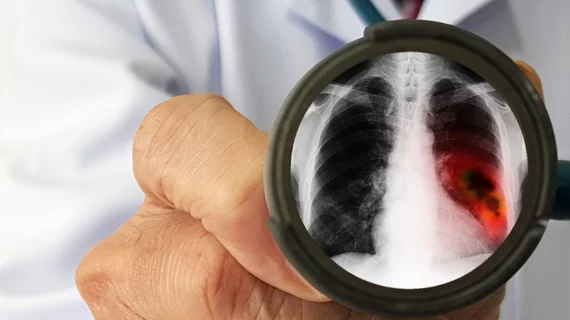
Compared with postoperative stereotactic radiation therapy, an investigational intraoperative RT approach could significantly reduce local tumor recurrence and improve survival in patients with newly diagnosed operable brain metastases.
New findings could shift the standard approach to preventing brain metastases in SCLC, particularly as modern MRI allows clinicians to detect and treat brain disease earlier.
The imaging agent could potentially help doctors characterize a malignancy's aggression and identify lesions with a higher likelihood of invasion or metastasis.
A new review led by UCLA researchers examines the utility of commercially available AI tools for screening mammography and evidence surrounding their ability to detect interval cancers.
Research presented this week at the American Society for Radiation Oncology Annual 2022 Meeting argues for the inclusion of radiation therapy as a standard of care in liver cancer patients who are ineligible for resection and other standard therapies.
Might mammography enhanced by contrast media prove a surer, faster way than other modalities—including digital breast tomosynthesis—to get to a definitive diagnosis for women with dense breast tissue? The American College of Radiology wants to know.
The adult brain may be more malleable than scientists previously thought, according to new research presented at the 35th European College of Neuropsychopharmacology.
Children are at heightened risk of major clinical depression when at least one parent has a history of the disorder. New research shows depression markers appearing on structural and functional brain MRI ahead of symptoms in these “familial risk” offspring from infancy through early adulthood.
Nearly 30% of corresponding authors included in the analysis shared that they had witnessed scientific fraud in their department within the last five years.
An AI startup in the neuro-oncology space has received the government’s go-ahead to market software for analyzing certain fast-growing brain tumors on MRI.