Radiologists use diagnostic imaging to non-invasively look inside the body to help determine the causes of an injury or an illness, and confirm a diagnosis. Providers use many imaging modalities to do so, including CT, MRI, X-ray, Ultrasound, PET and more.
Chest CT is routinely performed for things like lung cancer screening, coronary calcium assessment and pulmonary nodule surveillance, but the modality also can be used to extract additional information.
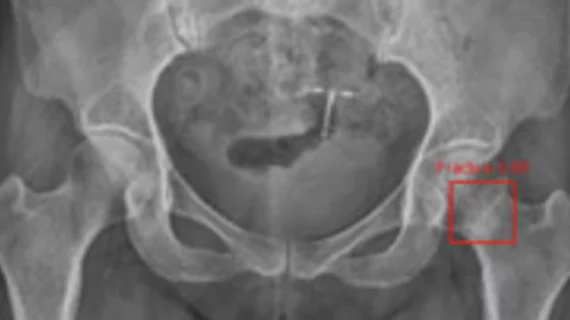
By highlighting subtle abnormalities that could otherwise be overlooked, an algorithm could potentially serve as an additional safety net when radiographic findings are indeterminate.
The University of Rochester, Department of Radiology, hosted its fifth annual PACS Conference, "The Expanding Integrated Digital Healthcare Enterprise," March 9 - 12, in San Antonio, Texas.
Health consultancy Capgemini Health has released a white paper aimed at being a resource to providers in search of guidance in implementation and operation of computerized physician order entry (CPOE) systems.
Network Appliance Inc. will be acquiring Alacritus, a privately held company based in Pleasanton, Calif., for approximately $11 million in an all-cash transaction.
The Bowers Museum, GE Healthcare, and a team of radiologists and international curators recently used computed tomography to scan six ancient Egyptian mummies from the collections of the British Museum.
Emory University School of Medicine's Department of Radiation Oncology recently became one of the first cancer treatment centers to use imaging and treatment technologies to treat gall bladder cancer with highly precise image-guided radiotherapy (IGRT), a
Eizo Nanao Technologies Inc. this week said it has achieved ISO 13485 certification which apply to the quality management system of its medical display devices.