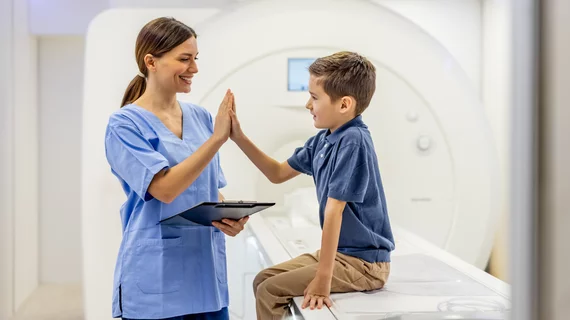
Radiologists use diagnostic imaging to non-invasively look inside the body to help determine the causes of an injury or an illness, and confirm a diagnosis. Providers use many imaging modalities to do so, including CT, MRI, X-ray, Ultrasound, PET and more.
Chest CT is routinely performed for things like lung cancer screening, coronary calcium assessment and pulmonary nodule surveillance, but the modality also can be used to extract additional information.
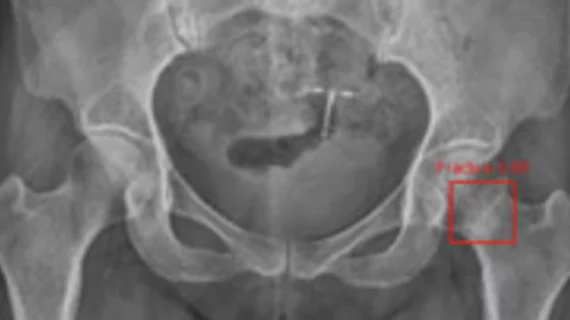
By highlighting subtle abnormalities that could otherwise be overlooked, an algorithm could potentially serve as an additional safety net when radiographic findings are indeterminate.
Matrox Graphics Inc. is introducing the newest addition to its line of Aurora VX series of display controller boards, the Aurora VX3mp, at the International Technical Exhibition of Medical Imaging (ITEM), in Yokohama, Japan, April 8 - 10.
Imaging representatives convened in front of Congress last week at a House Ways and Means Health Subcommittee hearing to focus on managing the use of imaging services -- a topic of growing concern after the Medicare Payment Advisory Commission (MedPAC) re
Medical technologists and healthcare specialists enrolled in the radiography training program at British Columbia Institute of Technology (BCIT) will be entering the digital era.
According to a 2004 MD Buyline report, Philips Medical Systems' picture archiving and communication systems (PACS) has been ranked No. 1 in customer service and support, and among the top four in applications training, installation/implementation, system
Dell this week introduced the Data Center Environment Assessment, a new service that will help customers analyze their current data centers and appropriately design for air flow and power requirements of more demanding server environments.