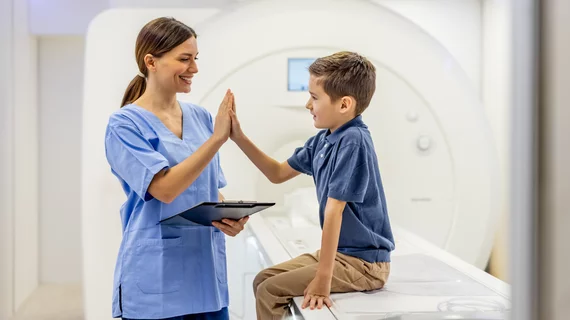
Radiologists use diagnostic imaging to non-invasively look inside the body to help determine the causes of an injury or an illness, and confirm a diagnosis. Providers use many imaging modalities to do so, including CT, MRI, X-ray, Ultrasound, PET and more.
Chest CT is routinely performed for things like lung cancer screening, coronary calcium assessment and pulmonary nodule surveillance, but the modality also can be used to extract additional information.
By highlighting subtle abnormalities that could otherwise be overlooked, an algorithm could potentially serve as an additional safety net when radiographic findings are indeterminate.
Eastman Kodak Co. this week revealed plans to broaden its computed radiography (CR) portfolio with the proposed $50.5 million acquisition of Orex Computed Radiography Ltd.
Winchester Systems Inc. is introducing the FlashDisk FC-3400 redundant storage system that supports both fibre Channel and serial ATA disk technology and is geared toward the mid-range storage environment.
The American Society for Therapeutic Radiology and Oncology (ASTRO) has published a new patient information brochure called "Radiation Therapy for Brain Tumors: Facts to Help People Understand Their Treatment Options."
Upon the departure of Dow Wilson, former CEO of GE Healthcare's Information Technologies business, the company has realigned its IT and Ultrasound businesses.
Heartlab Inc. said this week it will participate in the Integrating the Healthcare Enterprise (IHE) technical framework demonstration for cardiology at the 54th American College of Cardiology (ACC) meeting, March 6-9, in Orlando.