Radiologists use diagnostic imaging to non-invasively look inside the body to help determine the causes of an injury or an illness, and confirm a diagnosis. Providers use many imaging modalities to do so, including CT, MRI, X-ray, Ultrasound, PET and more.
Chest CT is routinely performed for things like lung cancer screening, coronary calcium assessment and pulmonary nodule surveillance, but the modality also can be used to extract additional information.
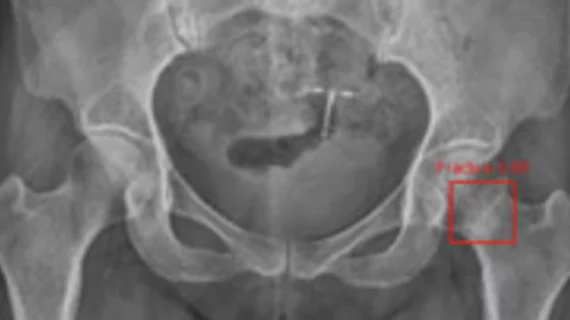
By highlighting subtle abnormalities that could otherwise be overlooked, an algorithm could potentially serve as an additional safety net when radiographic findings are indeterminate.
Bibb Allen, MD, FACR, chief medical officer of the American College of Radiology (ACR) Data Science Institute, discusses multiple factors involved in the adoption rate of artificial intelligence in radiology.
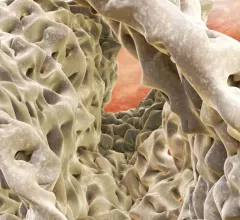
Experts compared the cortical thickness of three bones—the radius, tibia and second metatarsal—of 200 volunteers who had undergone prior bone mineral density measurements to evaluate the ultrasound method’s accuracy.
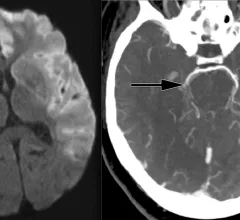
Bibb Allen, MD, FACR, chief medical officer of the American College of Radiology (ACR) Data Science Institute, explains the trend of using AI for the automated detection of stroke on computed tomography (CT) imaging and the need to include radiologists on the stroke care team.
Experts at MIT have developed ultrasound stickers that can be worn in the same manner as a Band-Aid while also producing diagnostic quality images in real-time.
The 40 evidence-based recommendations touch on everything from patient selection to study choice, radiation safety, clinical team dynamics, procedural techniques, study interpretations and more.